
FM Lighting Replacements Without Guessing: Check Driver and Dimming Compatibility Before the Fixture Looks “Ready to Replace”
When a Lighting Replacement Looks Right but the System Isn’t | FM Lighting Compatibility
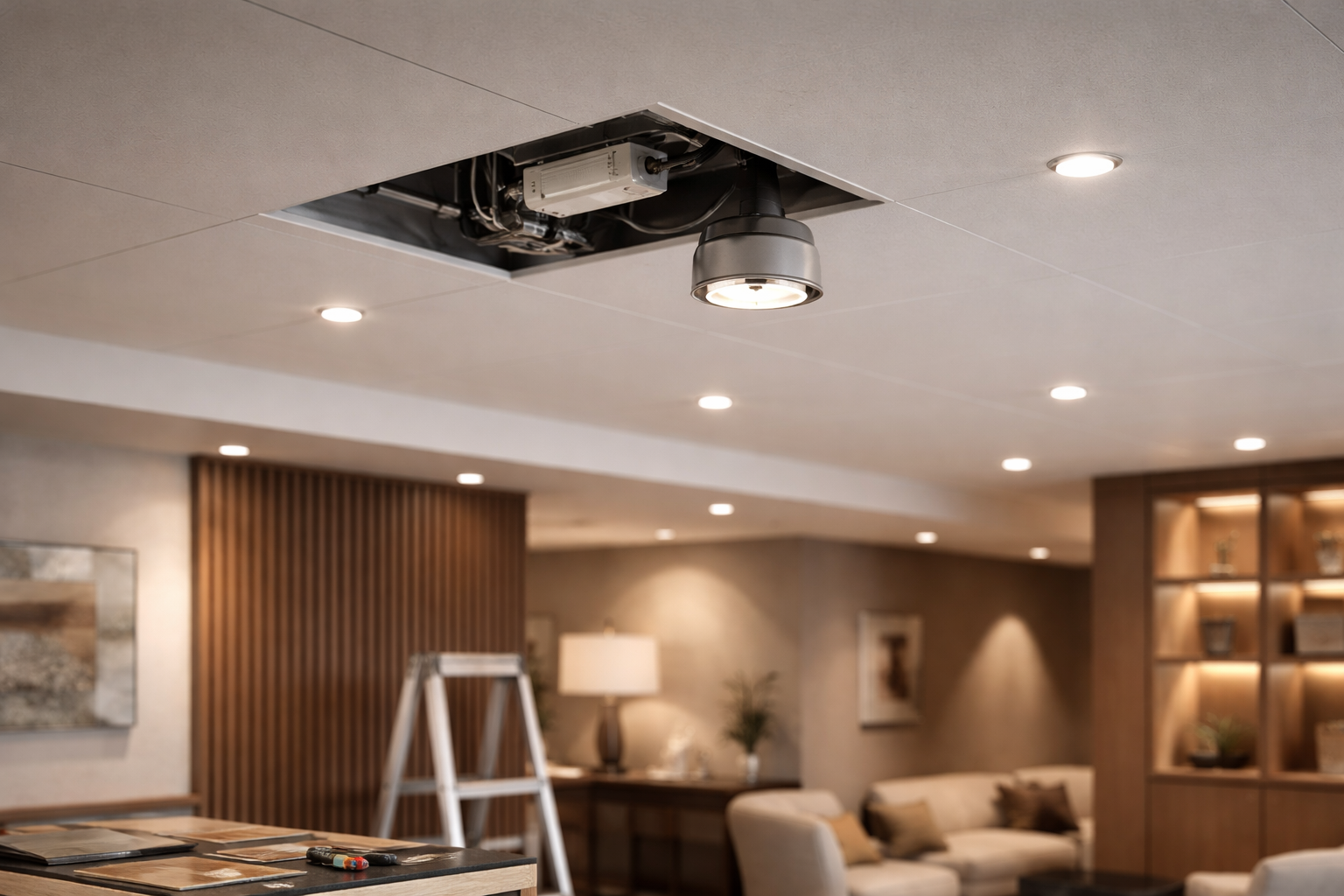
In FM replacements, a fixture can look correct long before it is truly safe to treat as a straightforward replacement.
That moment — when something appears ready to swap but the system behind it has not yet been confirmed — is where many avoidable delays quietly begin.
The new fixture may resemble the original. The dimensions seem workable. The finish fits comfortably within the surrounding interior. On drawings, product sheets, or internal review boards, the replacement can appear convincing enough to move forward.
Yet in operational buildings — hotels, serviced apartments, retail environments, and commercial interiors — the success of a replacement rarely depends on appearance alone. What often decides whether a fixture integrates smoothly is less visible: the driver, dimming behaviour, and control relationship already operating in the building.
A facilities manager once summarized the situation in a way that many project teams recognize immediately:
“If the dimming doesn’t match the system, the fixture isn’t ready — no matter how well it fits the ceiling.”
That line tends to circulate for a reason. In many FM-led replacements, compatibility questions remain hidden until the project already feels ready to proceed.
And if compatibility is still being assumed, the replacement is not really ready.
When “Looks Similar” Is Not the Same as “Works Within the System”
Replacement discussions often begin with visual alignment. Teams review fixture size, mounting type, finish, and overall presence within the space. Those elements matter, particularly in interiors where lighting contributes to atmosphere alongside surrounding finishes, furniture, and selected FF&E.
However, lighting inside operational buildings rarely functions as a standalone object.
Behind a seemingly simple fixture sits a chain of components: drivers, dimming signals, control interfaces, site wiring conditions, and sometimes legacy systems that have evolved through multiple project phases. When a replacement item enters that environment, it becomes part of that existing network.
A fixture that appears nearly identical can still respond differently once connected to the building’s control logic. Dimming behaviour may shift. Light levels may not transition smoothly. Fixtures within the same zone may react inconsistently. Commissioning may reveal problems that no one saw during early product review.
At that point, the issue is no longer about whether the fixture fits visually. The real question becomes whether the replacement interacts correctly with the system already running behind the ceiling.
This gap — between visual suitability and system compatibility — is where many FM replacements begin to drift toward rework.
Compatibility Issues Rarely Appear at the Beginning
One reason driver and dimming mismatch can be difficult to anticipate is timing.
During early stages, the replacement may pass several checkpoints without raising concern. The fixture appears correct during internal review. Samples confirm finish and proportion. Procurement moves forward because the item seems aligned with the original intent.
Only when the fixture interacts with the actual control environment — real dimming signals, existing circuits, grouped control behaviour, or building-specific system conditions — does the incompatibility become visible.
By that stage, the project is already moving.
Installation planning may be underway. Access schedules may be arranged around live operations. Procurement timing may already assume the replacement path is settled. Site teams may already be preparing around the assumption that the decision is closed.
Once the mismatch becomes obvious, the project is no longer deciding whether to replace. It is deciding how much disruption the earlier assumption has created.
That is why many FM replacement issues begin before installation, even if they only become visible during commissioning or after power-up.
When Replacement Meets Real Installation Conditions
Another reason compatibility risks expand quickly in FM projects is that lighting rarely exists in isolation from the surrounding interior.
A ceiling fixture may sit between joinery lines or near decorative panels established during earlier fit-out phases. A wall light may align with artwork, switch plates, or corridor geometry that defines the rhythm of the space. In many refresh or refurbishment programs, lighting replacements occur alongside selected FF&E adjustments or finish updates, even when the scope still appears limited.
When compatibility uncertainty emerges after installation preparation has begun, the replacement can quickly become a coordination issue rather than a simple technical adjustment.
Access panels may need to reopen. Surrounding finishes may require protection. Maintenance windows may need to be renegotiated within an operational building. Facilities teams may need to revisit work that was expected to stay contained.
At that point, the replacement is no longer just about a single fixture. It begins to affect procurement pacing, operational planning, and coordination between facilities teams and site contractors.
Replacement Problems Often Begin Earlier Than They Appear
Many replacement challenges are described as installation problems, yet the underlying issue typically began much earlier.
The turning point is subtle: compatibility is treated as likely rather than confirmed.
Once that assumption enters the process, it travels quietly through approvals, procurement discussions, and site planning. The replacement appears increasingly stable as decisions accumulate around it.
By the time the fixture reaches the ceiling, the project may already depend on that assumption being correct.
When it turns out not to be, the adjustment must happen within a far more constrained environment — one where operations, access timing, procurement momentum, and contractor coordination are already in motion.
The replacement that looks easiest on paper can still be the one that causes the most drag later.
A More Reliable Replacement Question
Within FM-led replacements, a small shift in perspective often changes the outcome of the entire process.
Instead of asking whether a fixture looks close enough to replace the original piece, a more reliable question tends to be:
Will this fixture actually work with the real driver, dimming method, and control conditions already operating on site?
That question does not require a full redesign of the lighting system. It simply places compatibility earlier in the decision sequence.
When appearance leads the conversation and compatibility follows later, replacement projects become more vulnerable to late-stage discoveries. In buildings where refresh programs run alongside daily operations, those discoveries rarely stay confined to the fixture itself.
In many FM projects, the safest replacement is not the one that looks most familiar. It is the one that proves it can operate within the real dimming and driver conditions of the building before installation ever begins
 FM Lighting Replacements Without Guessing: Check Driver and Dimming Compatibility Before the Fixture Looks “Ready to Replace”
 Hotel & Serviced Apartment Refresh: Check Circuits & Dimming Before Choosing Fixtures
 Why multi-stakeholder projects rush timelines but delay decisions
 Layered Lighting 101: The Fastest Upgrade That Changes a Home