Oct 1, 2026Wholesale & Customization
When a Custom Lighting Collection Becomes Too Broad for One Development Brief
A custom lighting collection can look cohesive but still be too broad for one development brief. See when one range starts becoming several development paths.
When a Custom Lighting Collection Becomes Too Broad for One Development Brief
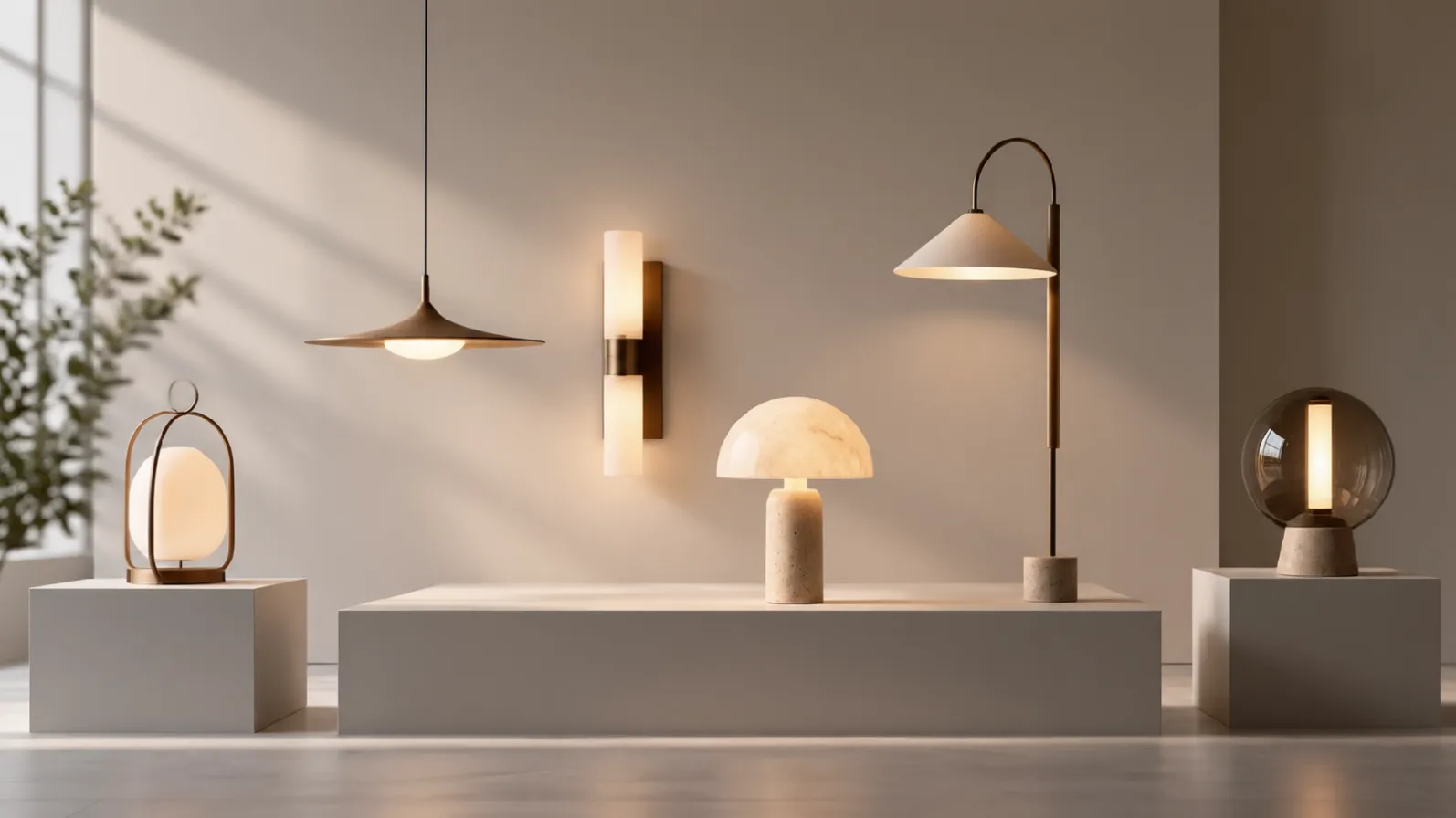
A pendant, wall light, table lamp and floor lamp can sit on the same collection board and look completely coherent.
From the brand side, they may already feel like one range.
From the development side, they may not be one project at all.
One fixture may be close to an existing product. Another may require significant changes. A third may begin from a buyer-defined drawing, while another is still mainly a visual reference.
The problem is not that the collection contains several product categories.
The problem begins when nearly every product needs a different development conversation.
At that point, what looks like one custom lighting collection may already be several separate development paths.
Visual Cohesion Does Not Create a Shared Development Starting Point
Brands naturally build collections around a visual language.
Products may share similar proportions, finishes, materials or decorative details.
That visual relationship is commercially important because the products need to make sense together in the market.
But it does not automatically mean that they begin from the same development position.
A pendant based on an existing construction may need relatively limited adaptation.
A wall light with a different structure may require another level of product work.
A table lamp may begin from a reference but still lack a defined product basis.
All three can belong to the same collection.
They simply do not necessarily belong in the same development conversation at the same time.
A Broad Collection Is Not Necessarily a Large Collection
The number of SKUs is not the main issue.
A larger range can still be relatively focused when the products share a clear development basis.
A smaller range can become fragmented when every fixture starts from a different place.
This is why a first collection can become difficult to discuss even when it contains only a few products.
The supplier may effectively be reviewing:
- one product adaptation,
- one deeper custom requirement,
- one buyer-defined concept,
- and another product that is still at reference stage.
Calling all of them “the first collection” does not remove those differences.
It can simply hide them.
The Commercial Problem Appears When Every Product Needs Its Own Development Logic
A collection brief becomes less useful when each fixture immediately creates a separate set of product-development questions.
The issue is not that different fixtures require different details. That is normal.
The issue is whether the products still share enough of the same commercial starting point to move forward as one active development group.
If they do not, the discussion can become fragmented very quickly.
One part of the range may be ready for product adaptation.
Another may still need design definition.
Another may represent a more substantial custom-development requirement.
At that stage, treating everything as one brief can make the collection appear more commercially defined than it really is.
Different Development Paths Can Still Belong to the Same Brand Collection
A brand does not need every lighting product to follow the same development route.
That would be unrealistic.
A coherent collection can contain products with different levels of development.
The important distinction is between:
what belongs to the brand's wider collection vision
and
what is actually ready to move forward as the first active development group.
Those are not always the same thing.
Some concepts may remain part of the future range without needing to enter the first supplier discussion at the same stage as the active products.
This does not reduce the collection.
It creates a clearer boundary around what is being developed now.
One Collection Board Can Hide Several Different Product Decisions
A mood board or reference presentation can make a range feel more resolved than it is.
The fixtures may already share:
- a recognizable aesthetic,
- related finish direction,
- similar decorative language,
- or a consistent customer position.
But the product decisions behind them may still be at very different stages.
One product may already have a clear physical direction.
Another may still depend heavily on the reference image.
A third may require a product-specific change that moves it further away from an existing fixture.
That difference matters before the supplier begins treating the range as one commercial development requirement.
The First Active Group Should Be Clearer Than the Full Creative Range
A new interior brand may already have ideas for many future products.
That is not a problem.
The first supplier discussion does not need to represent the entire future catalogue.
It needs to represent the products that are genuinely active now.
The commercial boundary becomes clearer when the brand can distinguish between:
- products currently intended to move into development,
- and concepts that still belong to the wider collection direction.
This is not the same as deciding how many SKUs a new brand should launch.
There is no universal number.
The issue is whether the active group is defined clearly enough for the supplier to understand what is actually moving forward.
Why This Matters Before the Collection Reaches Sampling
Once several unrelated development paths are treated as one project, later discussions can become harder to interpret.
A sample for one product may represent a relatively mature requirement.
Another product in the same collection may still be much earlier in development.
A third may require a different level of product work altogether.
The collection can therefore appear to be progressing as one unit when individual fixtures are actually at different stages.
For an interior brand preparing its first range, recognizing that difference early makes the development conversation more commercially accurate.
It also avoids treating every future concept as if it already belongs to the same immediate product-development commitment.
When Has a Custom Lighting Collection Become Too Broad for One Brief?
The clearest signal is not the number of products.
It is whether the products still share a meaningful development starting point.
If most of the range can be discussed around one defined product direction, the collection may still function well as one development group.
If each fixture immediately becomes a separate custom-development discussion, the collection may already be too broad to treat as one brief.
That does not mean the wider range should be abandoned.
It means the commercial discussion may need a clearer boundary between the active group and the future collection.
Custom Lighting Collection Discussions at MUENHUIDECOR
MUENHUIDECOR is a lighting-led B2B supplier supporting wholesale, semi-custom and custom lighting requirements for commercial buyers and interior brands.
Collection discussions can begin from existing lighting products, references, drawings or defined product concepts, depending on the product and quantity.
A proposed range does not need every fixture to follow the same development route.
Where the first collection contains several different product starting points, the active development group can be reviewed against the actual product requirements rather than treated as one undifferentiated custom request.
Preparing the First Active Lighting Range for Your Brand?
If your brand already has a custom lighting collection direction, send:
- the product references or drawings currently under consideration,
- the products intended to move forward first,
- the approximate quantity direction for those products,
- the target market,
- and the current development stage.
MUENHUIDECOR can review the active product group and discuss which requirements are suitable for further wholesale, semi-custom or custom lighting development, depending on the product and quantity.
Preparing a custom lighting range? Send the active product references or drawings, products intended to move forward first, quantity direction, target market and current development stage.