Sep 30, 2026Wholesale & Customization
When an OEM Lighting Project Needs New Tooling: What Interior Brands Should Clarify Before Development
New tooling changes an OEM lighting project from simple adaptation to a deeper development commitment. See what brands should clarify before proceeding.
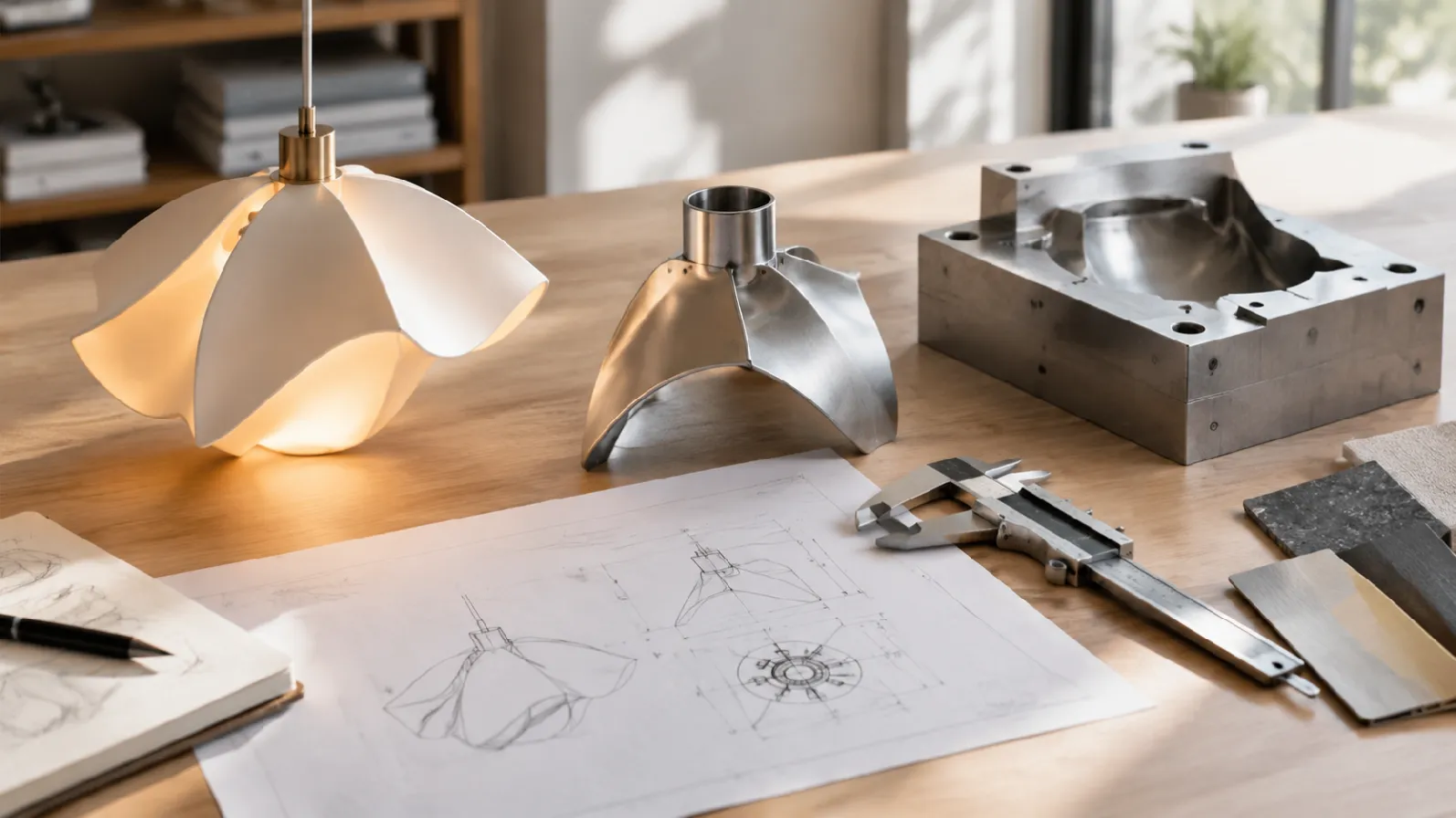
When an OEM Lighting Project Needs New Tooling: What Interior Brands Should Clarify Before Development
An OEM lighting project can remain relatively flexible while it is still based on an existing fixture, finish change or selected product adaptation.
The commercial situation changes when the design requires a new mold, dedicated tooling or another custom component that does not already exist.
At that point, the brand is no longer discussing only a product.
It may also be committing money to a development asset created specifically for that product direction.
That does not automatically make the project too complex.
New tooling can be a normal part of custom product development when the design justifies it.
But before an interior brand approves that investment, several commercial points should be clear enough for both sides to understand what the development commitment actually represents.
Not Every Custom Lighting Project Needs New Tooling
“Custom lighting” does not automatically mean new molds or dedicated tools.
Many commercial requirements can begin from an existing product platform.
Depending on the fixture, selected changes may involve:
- finish,
- dimensions,
- shade or diffuser details,
- electrical configuration,
- suspension arrangement,
- or other adaptations.
A deeper product change can be different.
If a new shape, component or construction detail cannot reasonably be achieved from an existing product or available component, the development discussion may move into new tooling or custom-component territory.
That distinction matters because the commercial commitment has changed.
The brand is no longer evaluating only how much the finished fixture costs.
It is also evaluating whether a product-specific development investment makes sense for the intended business.
A Tooling Charge and a Product Price Are Different Commercial Questions
A unit price answers:
What does each finished product cost under the quoted conditions?
A tooling or development charge answers a different question:
What additional work or asset is required before this product can be produced as intended?
Those costs should not automatically be treated as the same thing.
Depending on the product and development method, the investment may relate to a mold, fixture, forming tool, custom component or another product-specific requirement.
Not every OEM lighting project will involve the same type of tooling.
MUENHUIDECOR should therefore not publish a universal tooling formula or standard charge.
For a brand, the important point is simply to understand whether the quoted development investment is separate from the finished-product price and what requirement created it.
Clarify What the Development Investment Is Actually For
Before approving a new tooling requirement, the buyer should understand the commercial purpose of that investment.
For example, is the tooling required because:
- the product uses a new shape,
- an existing component cannot achieve the required dimensions,
- a dedicated structural part is needed,
- a new diffuser or shade form is required,
- or another product-specific component must be developed?
The buyer does not need access to the supplier's internal cost structure.
But the reason for the development requirement should be understandable at a commercial level.
This helps distinguish a genuine product-development requirement from a vague additional charge that has not been connected clearly to the design.
Tooling Use Should Not Be Assumed
One of the easiest assumptions to make is:
“We paid for the tooling, so we know exactly how it can be used.”
That assumption should not replace a commercial discussion.
Depending on the supplier relationship and development arrangement, questions may need to be clarified around:
- whether the tool is dedicated to the defined product,
- whether it is intended only for the buyer's program,
- how long it is expected to remain relevant to the product,
- and what happens if the product specification changes later.
These are commercial agreement questions.
They should not be inferred simply from the fact that a tooling charge appears on a quotation.
For brand owners developing proprietary lighting products, this distinction can become important after the first order rather than before it.
Tooling and Design Exclusivity Are Not Automatically the Same Thing
A brand may want a product that is differentiated from what other buyers can purchase.
That does not mean every custom change automatically creates exclusive product rights.
Likewise, paying for a tool does not by itself define the full commercial relationship around the design.
The project may involve separate questions about:
- the buyer's original drawing or design,
- supplier-existing product elements,
- newly developed components,
- dedicated tooling,
- branding,
- and any agreed exclusivity.
These issues should not be compressed into one vague statement such as:
“This is our exclusive OEM product.”
If exclusivity matters commercially, it should be discussed explicitly as part of the business arrangement.
The objective is not to turn a product discussion into a legal document.
It is to avoid building an important brand assumption on something that was never actually agreed.
A Tooling Decision Should Match the Commercial Potential of the Product
New tooling can make sense when the product is important enough to justify a deeper development commitment.
For an interior brand, that may be easier to evaluate when the product is intended to become:
- a defined commercial SKU,
- part of a branded lighting family,
- a continuing product line,
- or a product expected to support meaningful commercial volume.
The calculation is different for a speculative idea with no defined purchasing direction.
This does not mean a supplier should demand a guaranteed long-term forecast before discussing development.
It means the brand should understand why it is investing in a more committed development route.
A product that requires dedicated tooling normally deserves a clearer commercial purpose than a product being tested through a minor finish change.
Changes After Tooling Approval Can Become a Different Commercial Decision
A product may continue to evolve during development.
But once dedicated tooling is involved, certain changes can become more significant.
A revision to:
- critical dimensions,
- component geometry,
- structural relationships,
- or other tooling-dependent details
may no longer be the same type of adjustment as changing a finish or packaging detail.
The exact impact depends on the product.
The useful commercial question is therefore:
Has the design changed in a way that affects the development asset already being created?
If the answer is yes, the project may need another feasibility or cost discussion.
That is different from assuming every revision can be absorbed into the original tooling decision.
The Sample and the Tooling Decision Are Related, but Not Identical
A physical sample can help a brand evaluate appearance, scale, finish and product direction.
It does not automatically answer every commercial question about the tooling behind future production.
Likewise, approval of a sample does not necessarily define:
- tooling ownership,
- future tooling use,
- transfer arrangements,
- exclusivity,
- or responsibility for later modifications.
Those points depend on the actual commercial agreement.
This is particularly important for brands that expect the product to continue beyond the first order.
The sample confirms the product direction.
The tooling discussion defines part of the development commitment behind that direction.
When Should an Interior Brand Ask About Tooling?
Not at the first sign of customization.
And not only after a tooling charge appears unexpectedly.
The most useful time is when the product direction becomes specific enough that a supplier identifies a new mold, dedicated tool or custom component as necessary.
At that point, the brand can clarify the commercial implications before deeper development begins.
The discussion may include:
Why the tooling is required
What product requirement cannot be achieved through an existing component or current construction?
What the charge covers
Is the development investment separate from the unit product price?
How the tool relates to the product
Is it dedicated to one component, one model or a wider product family?
Whether exclusivity matters
Does the brand require any product, component or market exclusivity to be discussed separately?
What happens if the design changes
Could a significant revision affect the original tooling requirement?
These are not instructions for negotiating with a supplier.
They are the commercial questions that determine whether the brand understands the commitment it is about to approve.
What MUENHUIDECOR Can Review in an OEM Lighting Discussion
MUENHUIDECOR is a B2B lighting supplier supporting wholesale, semi-custom and custom lighting requirements for commercial buyers and interior brands.
Some custom lighting requirements may be achievable through existing products or selected adaptation.
Other concepts may require deeper product development or custom components, depending on the product, quantity and confirmed design requirement.
Where a concept appears to require new tooling or another dedicated development requirement, the commercial scope should be reviewed against the actual product before any universal assumption is made about cost, ownership or development terms.
Specific tooling arrangements are not presented as a standard promise because they can vary with the product and project.
Planning an OEM Lighting Product That May Require New Tooling?
If your brand is developing a lighting product that goes beyond an existing model, send:
- the product reference, drawing or design direction,
- the main dimensions or structural changes already defined,
- the target market,
- the estimated quantity or commercial program,
- and the current development stage.
MUENHUIDECOR can review whether the requirement appears suitable for further custom-lighting discussion and whether any product-specific development requirements need to be addressed before quotation or sampling proceeds.
Developing an OEM lighting product that may require new tooling? Send your drawing or reference, key structural changes, target market, quantity and development stage for review.