Oct 22, 2026Wholesale & Customization
Glass vs Acrylic for Picture Frames: Wholesale Buying Guide
Buying framed artwork for resale or hospitality? Compare glass and acrylic by weight, scratch resistance, reflections and cleaning before ordering.
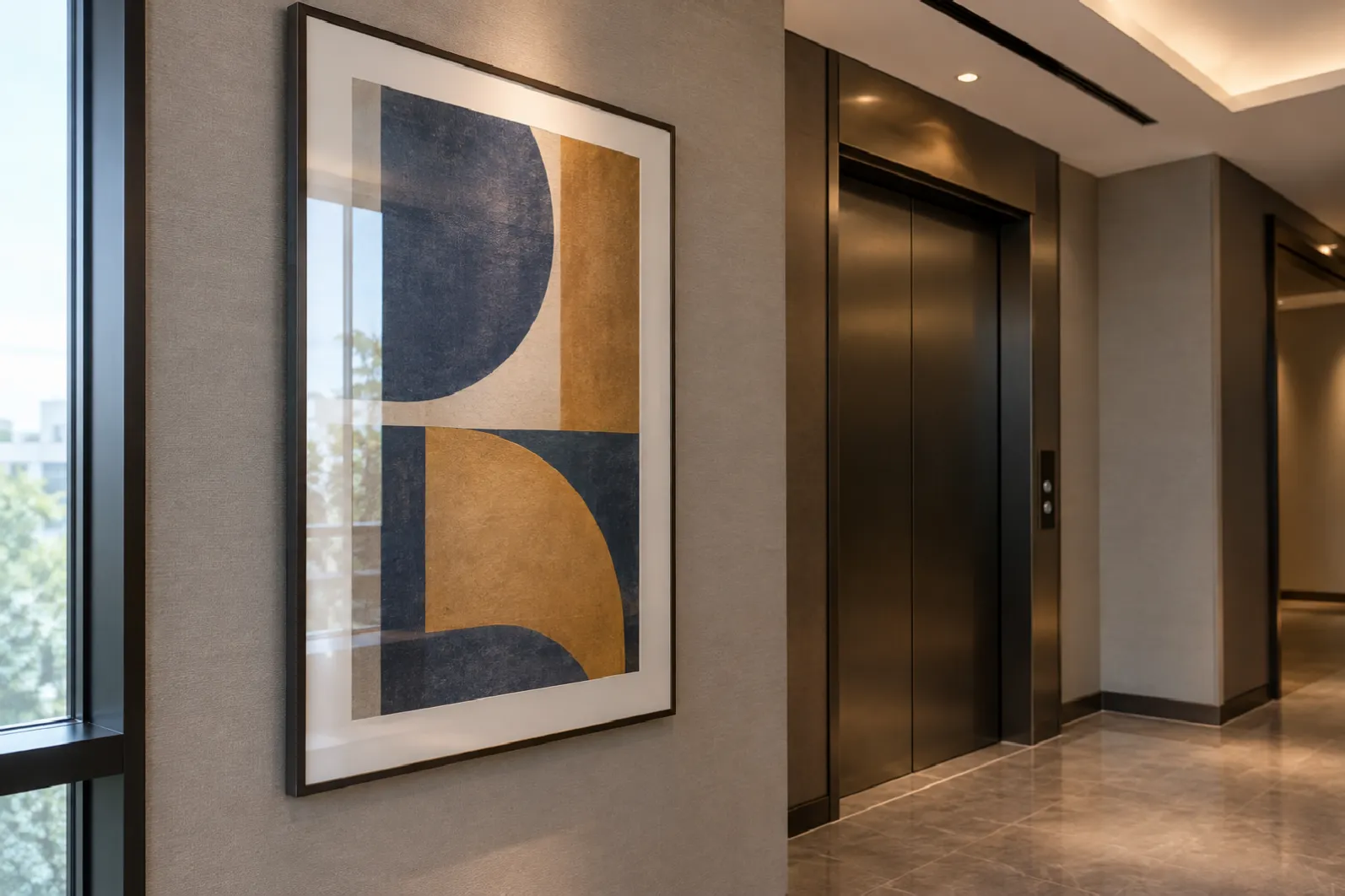
An artwork design can be approved while its front panel is still undefined. For a retailer ordering the same design in several sizes, or a hospitality supplier furnishing guestrooms and corridors, that missing detail can change the finished weight, cleaning requirements and viewing experience.
When comparing glass vs acrylic for picture frames, ordinary glass generally resists everyday scratching better than uncoated acrylic. Acrylic is generally lighter and more resistant to shattering than ordinary glass. The better choice depends on the finished artwork and how it will be used.
This guide is for businesses buying complete framed artwork for resale or commercial interiors. The transparent protective panel is called picture frame glazing. It is separate from the frame itself and from artwork printed directly onto glass or acrylic. A framed artwork does not necessarily include glazing; confirm the construction first.
Glass vs Acrylic: What Changes for the Buyer?
Consideration | Ordinary framing glass | Uncoated framing acrylic |
|---|---|---|
Weight at comparable size and thickness | Heavier | Lighter |
Handling impact | Can crack or shatter | More shatter-resistant, but can still be damaged |
Routine surface wear | Generally more resistant to scratching | More easily scratched by unsuitable wiping or handling |
Reflections | Depend on the selected panel and treatment | Depend on the selected panel and treatment |
UV protection | Confirm the specific grade | Confirm the specific grade |
Cleaning | Follow the supplied surface-care instructions | Use care instructions compatible with the exact acrylic grade |
Specialist coatings can change these comparisons. “Glass” or “acrylic” alone is not a complete specification.
When Glass Can Be the Practical Choice
Glass is worth considering for smaller framed pieces where finished weight and breakage exposure are acceptable, particularly when routine surface cleaning is a priority.
For example, a restaurant group ordering framed prints for dining-area walls may value resistance to incidental scratching during regular cleaning. That is a reason to discuss glass, rather than automatically requesting acrylic because it sounds like an upgrade.
The choice still depends on the location and the actual product. Ordinary framing glass should not be described as safety glass, and coatings can introduce their own cleaning requirements.
When Acrylic Deserves Consideration
Acrylic can be useful for larger framed artwork or display pieces that will be handled repeatedly. Lower panel weight may help a distributor or retail team handling larger formats; greater shatter resistance may also matter where breakage is a concern.
Ask for the weight of the complete framed piece, rather than estimating it from the panel material. The frame, backing, dimensions and panel thickness also contribute. A lighter front panel does not establish whether the finished artwork is suitable for a particular wall or mounting arrangement.
For a retail range, the smaller and larger versions of one design do not have to use identical glazing. Record the selected panel against each size so that later orders refer to the correct version.
These are illustrative purchasing situations, not documented MUENHUIDECOR installations.
Reflections: Changing Material May Not Solve the Problem
A framed print can look clear in a catalog photograph but reflect a window or wall light after installation. This matters in hotel corridors, restaurant seating areas and retail displays where customers view artwork from different angles.
Standard clear acrylic is not automatically anti-reflective. Neither is standard clear glass.
If reflections are the concern, describe the installation position and nearby light sources when discussing the order. Review the selected panel's appearance under relevant lighting before committing to a particular treatment.
Anti-reflective coatings and matte non-glare surfaces are different approaches. UV protection is a separate property again. Request product information for any specified performance; clarity alone does not establish it.
Match the Panel to the Receiving Team's Cleaning Routine
For hospitality buyers, the question is practical: can staff maintain the supplied surface using a compatible method?
Uncoated acrylic is more vulnerable to scratching than ordinary glass, and cleaners suitable for glass may be unsuitable for acrylic. Some specialist acrylic products have abrasion-resistant coatings, so care guidance must match the actual grade supplied.
For resale, use the confirmed material description and care guidance in the product listing. Avoid unsupported labels such as “scratch-proof,” “UV-protective” or “anti-reflective.”
For a repeat purchase, retain the agreed material, thickness and treatment with the artwork reference and size. A reorder described only as “the same clear panel” leaves room for misunderstanding.
What Should the Artwork Quotation Specify?
Before comparing complete framed artwork offers, check that the front panel is defined on the same basis.
Detail to confirm | Why it matters |
|---|---|
Artwork reference and finished width × height | Connects the panel choice to a specific finished item |
Glass or acrylic, with thickness | Defines the material being quoted |
Any required surface treatment or UV performance | Separates standard clear panels from specialist options |
Finished unit weight | Supports handling and installation discussions |
Care instructions | Helps the receiving business maintain the supplied surface |
A higher specification is useful when it solves a defined requirement. A small retail print and a large corridor artwork may need different choices, even within one order.
If the earlier decision is whether to order framed or unframed, see our framed vs unframed artwork guide.
Discuss a Wholesale Framed Artwork Order
MUENHUIDECOR is a B2B supplier specializing in lighting, decorative artwork and selected FF&E products for wholesale and hospitality buyers worldwide. Artwork requirements can be discussed independently for retail collections, distribution and commercial interiors.
Browse our artwork range for design references or review our custom and semi-custom wholesale supply approach. The suitable glazing, available dimensions and commercial terms need confirmation for the selected artwork and quantity.
Request a quote for complete framed artwork. Send:
- Your company name or website and destination country.
- Artwork references and finished sizes.
- Approximate quantity by design and size.
- Intended use: resale, hospitality supply or installation.
- Target timing and any known panel requirement.
If you have not selected glass or acrylic, state the main concern: finished weight, breakage, reflections or cleaning. A clear purchasing brief is enough to begin the discussion.