
Oct 18, 2026Wholesale & Customization
Wholesale Wall Decor: One-Piece Designs or Multi-Piece Sets?
Buying wall decor for resale or hospitality supply? Compare connected designs and multi-piece sets, then define set contents, finish, depth and quotation scope.
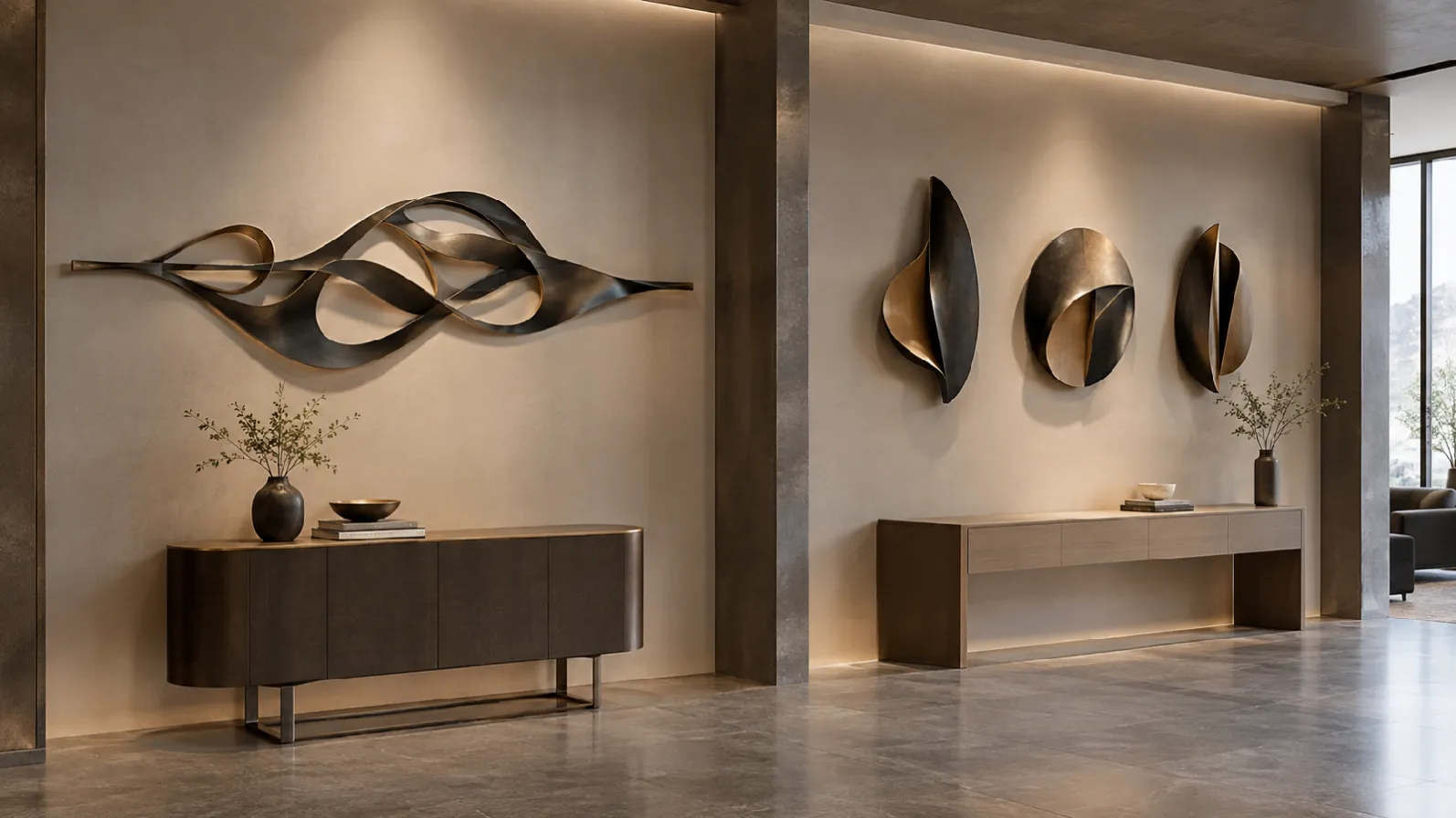
You have found a wall decor design for a retail collection, distributor assortment or hospitality order. Before comparing quotations, establish whether you are buying one connected unit or a set of separate elements—and exactly what one order unit includes.
A one-piece design keeps its composition within a connected structure. A multi-piece set uses separate elements and the spaces between them to create the display. Neither format automatically means a lower price, shorter lead time or simpler installation.
One-Piece Design or Multi-Piece Set: Which Fits Your Order?
Buying requirement | Format to consider | What the quotation needs to identify |
|---|---|---|
A composition whose elements remain connected | One-piece design | Overall dimensions and the connected unit supplied |
A grouped display with separate elements | Multi-piece set | Contents per set, individual dimensions and layout |
A product sold as one assortment item | Either | What the retailer’s saleable unit includes |
Repeated displays at several commercial locations | Either | Product reference, quantity and any location-specific differences |
Restricted delivery access | Review the actual design and packaging | Packed dimensions and handling information |
A connected decoration may contain several visible shapes attached to one frame. It is still one piece if supplied as a connected unit. A multi-piece set contains separate items intended to form a composition; it does not automatically mean a structure that can be dismantled and reassembled.
Compare the Price for the Complete Supply Requirement
For wholesale wall décor, “price per piece” is incomplete unless both sides mean the same thing by a piece.
For illustration, ten complete sets containing three specified elements each means thirty decorative elements. “Ten pieces” could mean ten sets or ten individual elements. A clearer request is:
10 complete sets, with 3 specified elements per set.
This is an example of quantity wording, not a minimum order or standard pack configuration.
The quotation should identify the design reference, contents of each set and number of complete sets. List any additional individual elements separately; their availability and order conditions need review.
Also distinguish the saleable unit from shipping packaging. One retail set does not necessarily arrive in one carton. For resale, discuss any retail packaging or labelling requirements separately from protective transport packaging.
Check the Complete Layout and Installed Depth
For a set, the finished width and height depend on individual dimensions, gaps and orientation. Moving separate elements closer together changes the composition. For a connected design, the relationships within the structure are fixed, but its outline and projection still need to suit the location.
For sculptural metal wall art, ask what the listed depth measures:
- Material thickness: the thickness of a metal component.
- Product depth: the front-to-back measurement of the finished product, with the measurement basis identified.
- Installed projection: the distance from the finished wall surface to the furthest point after mounting.
These are different measurements. Rear attachments or spacers may affect installed projection; material thickness alone does not establish the product’s depth, weight, stability or quality.
Where depth matters, request an available side view or drawing for the shortlisted design. Identify any projection limit and nearby doors, curtains, furniture or circulation space. Reducing depth may change the structure, overlaps or shadows, so it needs review as a product change.
For several locations, provide the wall dimensions and any differences that affect the chosen layout. Do not assume one arrangement fits every site.
For Metal Wall Décor, Define the Finish and Visible Workmanship
“Gold,” “bronze” and “black” give a color direction without defining the whole surface. Identify the intended sheen, texture and treatment: for example, a brushed appearance, smooth matte surface or aged effect.
Keep material and appearance descriptions separate. A bronze-tone finish does not mean solid bronze, and brass-colored metal does not establish solid brass construction. The base material and finish should be identified for the selected product.
Review the surfaces visible from normal viewing positions, including side edges, joins, overlaps and inner faces. For a set, also review how the elements look together. Natural materials and handmade details may introduce variation; the important appearance characteristics and acceptable variation need an agreed reference.
Use the sample that answers the purchasing question:
Sample or reference | What it can help evaluate | What it does not establish on its own |
|---|---|---|
Finish coupon or material sample | Surface color direction, sheen and texture | Complete product workmanship, proportions or mounting |
Individual finished element | That element’s edges, joins, surface and construction | The appearance and contents of the whole set |
Complete finished unit or set | Overall appearance and the supplied composition | Suitability of the receiving wall or site fixing method |
Review physical references under agreed viewing conditions where practical. Photographs help communicate, but lighting and screen differences can affect perceived color.
For custom metal wall art, mark which features should stay and which should change. A finish adjustment, different depth and revised rear attachment are separate requests. Their feasibility, sample requirements, quantities and timing need product-specific review.
Review Delivery and Mounting Information for the Selected Model
Product dimensions, installed layout and packed dimensions serve different purposes. Review available weight and packing information, distinguishing preliminary estimates from confirmed details. Where access is restricted, the parties responsible for delivery should assess entrances, lifts, doorways and the internal route.
For mounting, identify the intended orientation, rear attachment points, available weight information and what hardware or documentation is included. A front photograph or a description such as “wall mounted” cannot establish suitability for every receiving wall.
The supplier should clarify product information and scope of supply. The buyer or appointed site professional should provide relevant wall conditions and review the site-specific fixing method. For a multi-piece set, the agreed layout should also identify orientation and positions.
If timing is important, state the destination and required arrival date. Production or dispatch timing should be distinguished from transport and arrival estimates. An existing design should not be assumed to be in stock.
Keep an Agreed Reference for Repeat Orders
Record the selected design, dimensions, materials and finish. For sets, retain the contents and layout reference as well.
If future orders may need individual replacement elements, raise this before the first purchase. Separate-piece availability, minimum quantities and coordination with an earlier finish need review; they should not be assumed.
For additional retail assortments or hospitality locations, start with the agreed reference and identify what has changed. This provides a clearer quotation basis than an unlabelled photograph described as “the same as before.”
Discuss Your Wholesale Wall Décor Requirement With MUENHUIDECOR
MUENHUIDECOR supplies decorative lighting, artwork and selected FF&E products for wholesale and commercial buyers worldwide. Wall décor can be purchased independently for resale, hospitality supply or commercial interiors.
Explore the Wall Objects collection, including connected metal and wood wall décor and a multi-piece metal wall décor reference. These are different designs, not alternative constructions of the same model. Final specifications and order conditions need confirmation for the selected product.
Request a Quote for Your Selected Design
Send your product reference, required size or available wall area, quantity stated as individual pieces or complete sets, intended application or sales channel, and destination.
Include any requested finish changes, important depth limit or fixed arrival date. Details that are still open can be identified as pending for the next discussion.
Send your wall decor requirement to discuss the selected design, quotation scope, sample needs and timing.