Nov 1, 2026Wholesale & Customization
Custom Lighting Value Engineering: Is It Still the Same Design?
When a custom light exceeds your buying range, should you accept a revised version? Compare wholesale product identity and hospitality needs before requesting a quote.
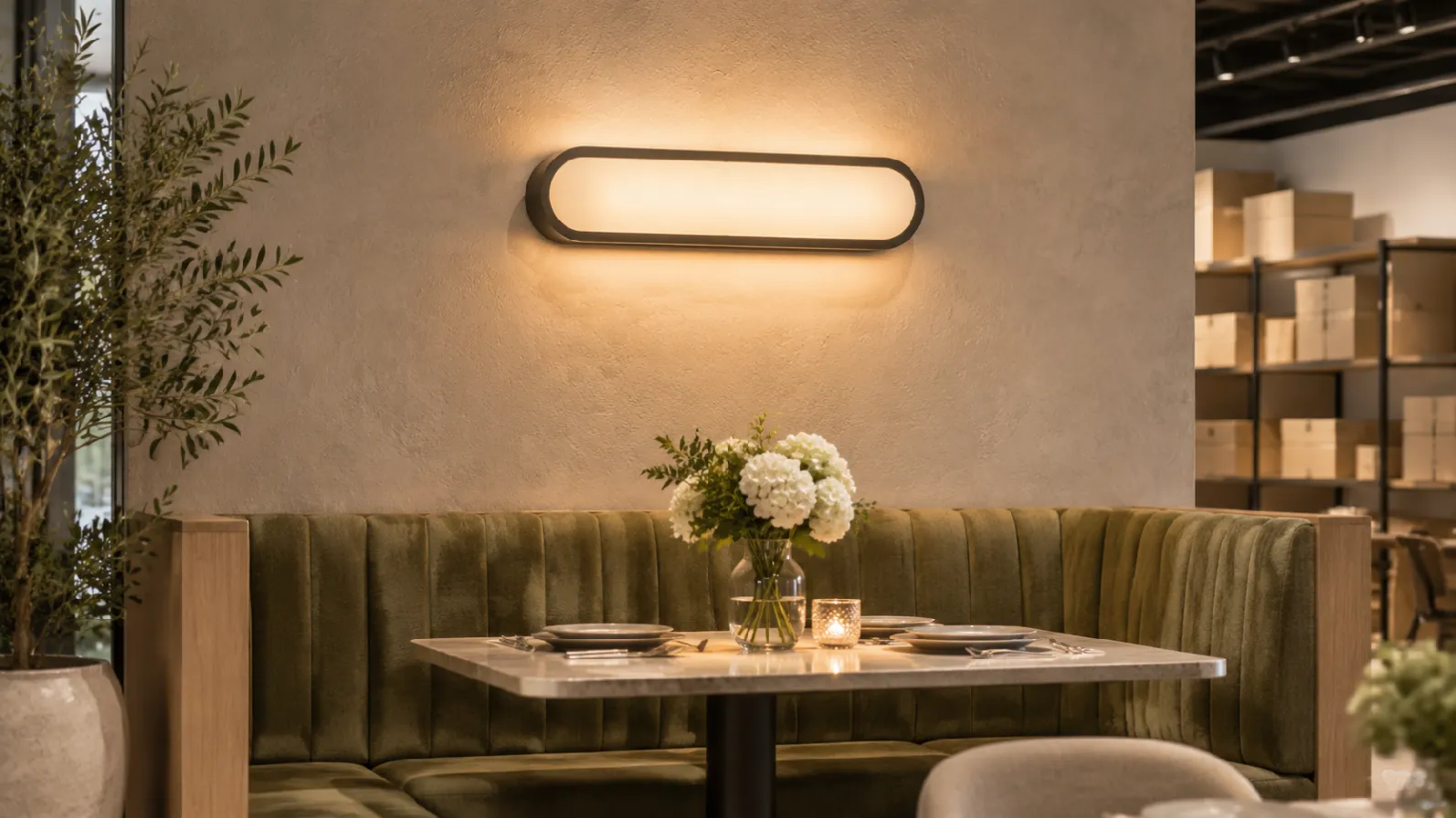
A lighting importer has shortlisted a decorative pendant for a wholesale range serving restaurants and boutique hotels. Its appearance suits the intended customers, but the proposed specification sits above the buyer's purchasing range. The next question sounds simple: can the fixture be adjusted without losing the design?
For a distributor, the answer matters beyond one installation. The business will present a named product to trade accounts, and some customers may come back for that same design. A hotel owner might instead be judging the fixture against one approved interior scheme. Both buyers need to know whether a proposed revision is an acceptable version of the selected product—or effectively a different product.
This is the useful commercial meaning of custom lighting value engineering: reviewing a specific change against what the buyer actually needs. It is not an automatic reduction in price, a list of inexpensive replacement parts, or proof that two fixtures with a similar outline will perform identically.
When an Over-Budget Fixture Becomes a Different Buying Decision
At the start of a lighting enquiry, a reference image may express the desired style. Once a buyer has chosen a product direction, a request to change the specification changes the question. The decision is no longer only whether the original fixture is attractive. It is whether a proposed version can still fulfil the intended commercial offer.
That is different from comparing prices submitted for the same reference. Two quotations may differ because suppliers interpreted the starting requirement differently; MUENHUIDECOR addresses that issue separately in why custom table lamp quotes differ. Here, a buyer is consciously considering a revised product, not simply trying to discover why two prices differ.
If the purchase is for resale, a version change may affect the photographs, description or expectations attached to that product. If it is for a hotel, the changed fixture may need to be judged against the lighting and interior conditions of its intended location. Neither outcome is determined by the target budget alone.
What Makes the Selected Design Worth Keeping?
A buyer may be attracted by a pendant's overall shape, the way its shade sits in relation to the suspension, or the appearance of light through a diffuser. Another brand may care more about a distinctive visible surface or the form seen from the approach to a restaurant counter.
Those are examples of design identity, not a universal list of details that can or cannot change. A revised exterior may remain recognizable in a catalogue image yet appear different when illuminated. Likewise, preserving a familiar finish color does not establish that the revised product has the same materials or construction.
The practical commercial question is whether the proposed version can still be presented truthfully as meeting the buyer's intended result. If the defining feature no longer exists, calling it the same product may mislead a retail account or a hospitality client. In that case, a different product reference can be more accurate than an assertion of equivalence.
Three Honest Outcomes of a Value-Engineering Review
Possible decision | When it makes commercial sense | What must not be implied |
|---|---|---|
Keep the original specification | The characteristics the buyer needs cannot be acceptably changed within the brief | That the original fixture will automatically meet the target buying price |
Review a clearly identified alternative version | The brand or project decision-maker is willing to consider a specific changed product | That appearance, electrical suitability, price or availability are identical without evidence |
Choose another existing model | A different product is a better fit for the actual purchasing range or customer requirement | That a substitute is the same model merely because its style is similar |
This is a decision about whether to pursue a commercial offer. It is deliberately not a technical substitution table or a promise of savings. A product-specific quotation and any required validation come after the actual version and application are identified.
For a lighting brand, accepting a variant should lead to an honest description of what customers will buy. For an importer serving several accounts, choosing a different existing model may be preferable to presenting an altered light as though nothing material has changed. Both can be legitimate buying decisions.
A Wholesale Pendant and a Hotel Bedside Sconce Are Not the Same Brief
MUENHUIDECOR's decorative pendant light for hotels, restaurants and lounges is publicly listed for project and wholesale supply. Its page identifies metal, glass or selected custom materials and describes dimensions, finishes, suspension and lighting requirements as subjects for discussion. These are potential areas for a product-specific review, not a verified menu of cheaper substitutions.
An importer may be considering such a pendant for restaurant-design accounts in more than one market. The buyer's commercial concern is whether the actual version offered will match the product its customers have selected. This is a more useful starting point than asking for a general percentage reduction in cost without a named fixture or quantity.
The hotel guestroom bedside wall sconce with frosted acrylic diffuser raises a different issue. Its public product description identifies a warm bronze-tone appearance, a frosted acrylic diffuser and localized light. It states that the actual body material requires confirmation. A hospitality buyer may particularly care about the visual relationship between the fixture, the headboard and the light it produces. A photo of a proposed variation alone cannot prove the same result.
Neither listing establishes a lower-cost approved version, a tested performance match, or compliance for every destination country. MUENHUIDECOR should not make those claims without evidence for the specific proposed fixture.
Similar Appearance Does Not Establish the Same Lighting Result
Decorative lighting has both an unlit appearance and a lit effect. A change may be barely noticeable on a small website thumbnail but more apparent when the fixture is operating. That matters if the original design was selected for its visible glow or the way it shapes a dining, lounge or guestroom environment.
The same caution applies to electrical and control requirements. Describing a proposed version as dimmable is not proof that it works with the control arrangement of a particular property. A stated wattage is not evidence of equal light output. Any relevant performance, electrical, installation and market requirements must be established for the actual product version, not borrowed from a reference image.
This article does not prescribe drivers, LED parts, materials or manufacturing changes. Those decisions require a defined fixture, appropriate technical review and the documentation applicable to the market and use. Budget pressure never makes a required safety condition optional.
One Wholesale Design May Serve Customers in Different Markets
A distributor may want one recognizable decorative design for retail and hospitality accounts in several countries. However, selling the same-looking form into different markets does not establish that the same electrical or labeling version is appropriate everywhere.
The business may therefore need to discuss a market-specific product version rather than a single universally interchangeable SKU. Its customer-facing description should distinguish the actual version being offered. This is particularly relevant when a buyer plans to keep a lighting design in its range after the first sale.
That point supports better first-order communication; it does not promise indefinite availability, identical future components or a repeatable price. MUENHUIDECOR has a separate discussion of the broader issue in why a customized table lamp may be harder to repeat. This page is about accepting the initial budget-driven product decision, not managing later production batches.
The Right Enquiry Is About One Product and One Commercial Requirement
“Keep the design, make it cheaper” gives a supplier little basis for a responsible proposal. It does not identify the product, destination, quantities, design identity or required lighting result. An open-ended request for a redesign may produce ideas that have no confirmed commercial or technical basis.
A qualified importer or brand can make the conversation more useful by naming the selected reference, the customer or sales channel, and the approximate quantity per proposed version. If the buyer already knows which appearance or lighting result is essential, that matters more than a long, speculative list of replacement components.
For a hospitality buyer, the intended location and known electrical, control or site requirements help establish whether a variant is even relevant. For a reseller, the destination markets, planned customer type and whether the product is intended for a continuing range explain the business opportunity. A target purchasing range and requested arrival period can help determine whether further product-specific discussion is practical.
These are commercial inputs for assessing a defined request. They are not instructions for obtaining a free bill of materials, a factory cost breakdown or a complete lighting redesign.
Discuss a Defined Lighting Alternative With MUENHUIDECOR
MUENHUIDECOR supplies decorative and selected architectural lighting for international wholesalers, importers, retail brands and hospitality buyers. Buyers can explore the pendant-light collection or wall-light collection before selecting a specific product direction.
If a fixture under consideration falls outside your purchasing range, send your company name, selected product link or drawing, essential design and lighting expectations, estimated quantity per version, destination country, sales channel or application, and target purchasing range. State whether the order is for initial resale, an ongoing trade range, recurring hospitality supply or one defined project. Include timing and any applicable market or site requirements already known.
We can review whether the defined product and quantity are suitable for a commercial discussion. Available changes, sampling, documentation, minimum orders, packaging, timing and pricing must be confirmed for the actual version. For broader supply scope, read custom and semi-custom lighting for wholesale buyers.
Send a product-specific custom or wholesale lighting enquiry so the next conversation concerns a real buying requirement—not an unspecified promise to make a design cheaper.