
The Invisible Curator: Precision Lighting for Galleries, Museums & Cultural Spaces
The Invisible Curator: Precision Lighting for Galleries, Museums & Cultural Spaces
In a gallery or museum, lighting does not simply illuminate; it performs a high-wire act of revelation and protection. It is the “invisible curator,” tasked with making artworks speak with clarity and emotion while safeguarding their physical integrity for generations. This technical discipline demands a relentless pursuit of optical precision, color fidelity, and conservation science. This guide details the principles and practices of lighting that honors both art and viewer.
1. The Conservator's Dilemma: The Balance of Light and Damage
The primary constraint is the photosensitivity of artifacts. Light, especially ultraviolet (UV) and infrared (IR) radiation, causes irreversible fading and thermal damage. The curator’s dilemma is balancing sufficient visibility for appreciation with minimal exposure for preservation.
Lux Limits: International guidelines prescribe strict maximum illuminance levels based on material sensitivity. Robust textiles and manuscripts may be limited to 50 lux, while oil paintings might tolerate 150-200 lux. Lighting design must achieve these targets precisely.
UV & IR Filtration: All light sources must be 100% UV-free. IR radiation (heat) is minimized using cold-light reflectors, LEDs with efficient thermal management, and by ensuring adequate distance between fixture and object.
2. Optical Precision: The Surgeon’s Toolkit
General lighting has no place here. The tool of choice is the precision optical projector (ellipsoidal reflector spotlight).
Framing Attachments: Adjustable shutters (barn doors) allow the beam to be sculpted to the exact dimensions of a painting, eliminating light spill onto the wall and focusing attention immaculately.
Beam Shaping: A variety of lenses create hard or soft edges, while gobos can project subtle patterns for atmospheric effect in interpretive displays.
Absolute Glare Elimination: The viewer must never see the light source. This is achieved through deep baffling, precise aiming angles (the “30-degree rule”), and honeycomb louvers—critical accessories that block all off-axis views of the LED, ensuring the artwork appears to glow without a visible origin.
3. Color Fidelity: Revealing the Artist’s True Intent
Poor color rendering is a form of visual distortion. Standard LEDs fail to reproduce the full spectrum, particularly in reds (R9) and deep blues.
CRI >95 (R9 >90): This is the minimum requirement. Premium museum-grade LEDs offer CRI 97-98 and excellent R9 values, ensuring vibrant vermilions, rich ochres, and subtle flesh tones are rendered with complete accuracy.
TM-30-18 Metrics: Beyond CRI, the TM-30 standard evaluates fidelity (Rf) and gamut (Rg), providing a more complete picture of a light source’s ability to saturate and distinguish colors authentically.
Consistency: All fixtures in a gallery must have identical chromaticity to prevent shifts in color appearance as visitors move between artworks.
4. Specialized Scenarios: Tailoring Light to Form
Paintings (2D): The goal is even, vertical illumination. Fixtures are placed at a 30-degree angle from the vertical plane to minimize specular glare from varnish. Symmetrical lighting from two fixtures at equal angles is often used for larger works.
Sculpture & 3D Objects: Lighting must reveal form and texture. Multiple fixtures from different angles (key, fill, backlight) create modeling shadows that define volume. The use of grazing light from a steep angle can dramatically emphasize surface texture.
Display Cases: Lighting is integrated within the case structure to avoid glass reflections. Fiber optics or micro-LEDs provide cold, pinpoint light. Diffusers ensure even distribution, and the case design itself must block ambient light from contaminating the controlled interior environment.
Textiles & Delicate Works: Light levels are at their lowest. Diffuse, indirect lighting is paramount, often using a lantern or louvered ceiling that bounces light onto the object, eliminating all direct beam exposure.
5. Flexibility & Control: The Curatorial Freedom
Exhibitions change, and lighting must adapt without structural renovation. A modern museum system is built on flexibility:
Track & Recessed Adjustables: A grid of power tracks in the ceiling allows projectors to be repositioned, re-aimed, and refocused for each new exhibition.
Digital Control & Presets: Each artwork or zone has a dedicated preset, storing intensity, focus, and even color temperature (for interpretive spaces). This allows for perfect, repeatable setup and the ability to implement “time-based dimming,” where light levels automatically drop further after public hours.
Conclusion: The Highest Form of Respect
Museum lighting is the ultimate expression of technical design in service of art. It requires a deep understanding of photometry, conservation, and visual perception. When executed to these exacting standards, lighting withdraws completely. It does not decorate or distract; it acts as a flawless lens, allowing the artwork’s materiality, color, and emotion to communicate directly with the viewer, all within a framework of absolute preservation. It is, in essence, the highest form of respect a designer can pay to cultural heritage.
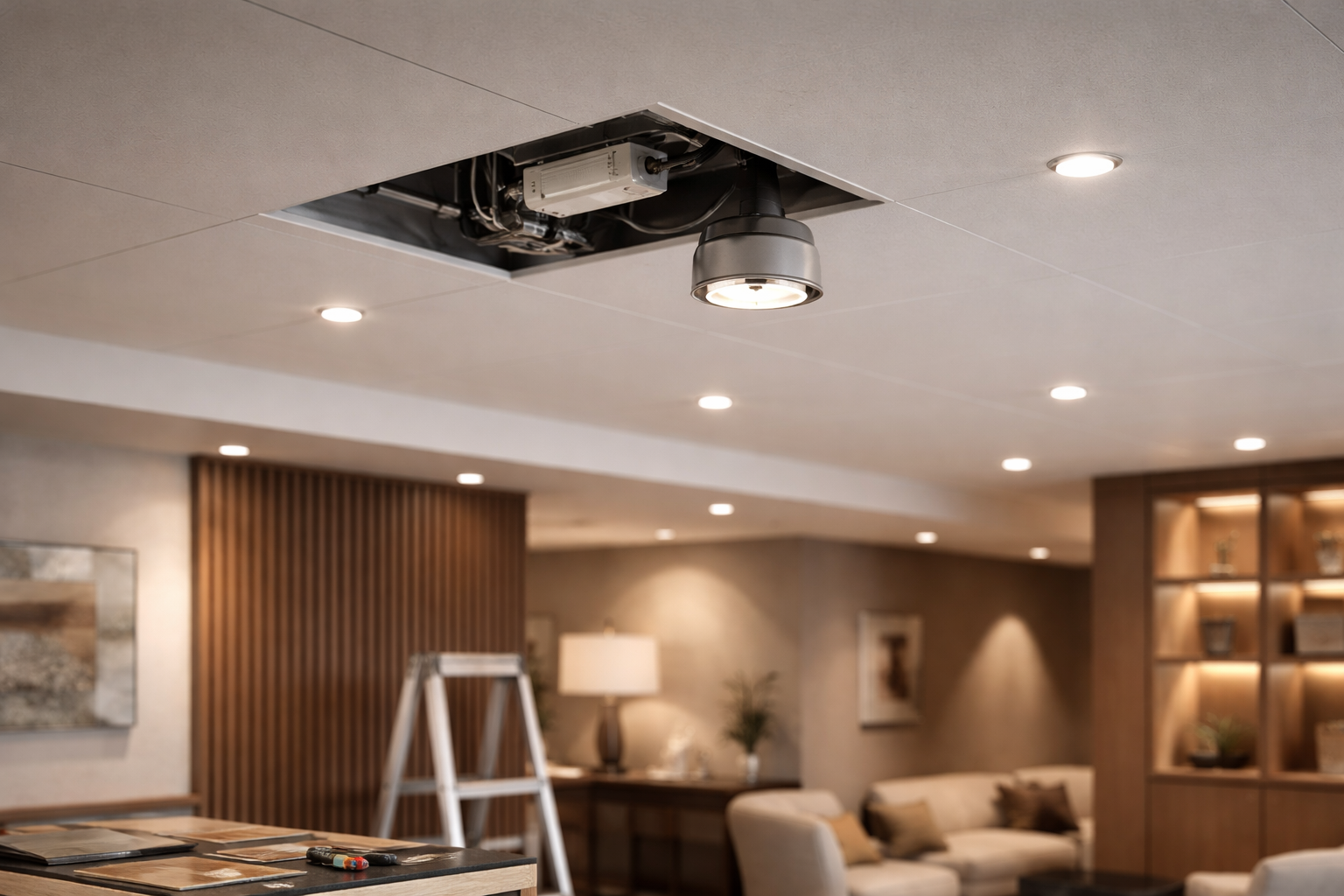 FM Lighting Replacements Without Guessing: Check Driver and Dimming Compatibility Before the Fixture Looks “Ready to Replace”
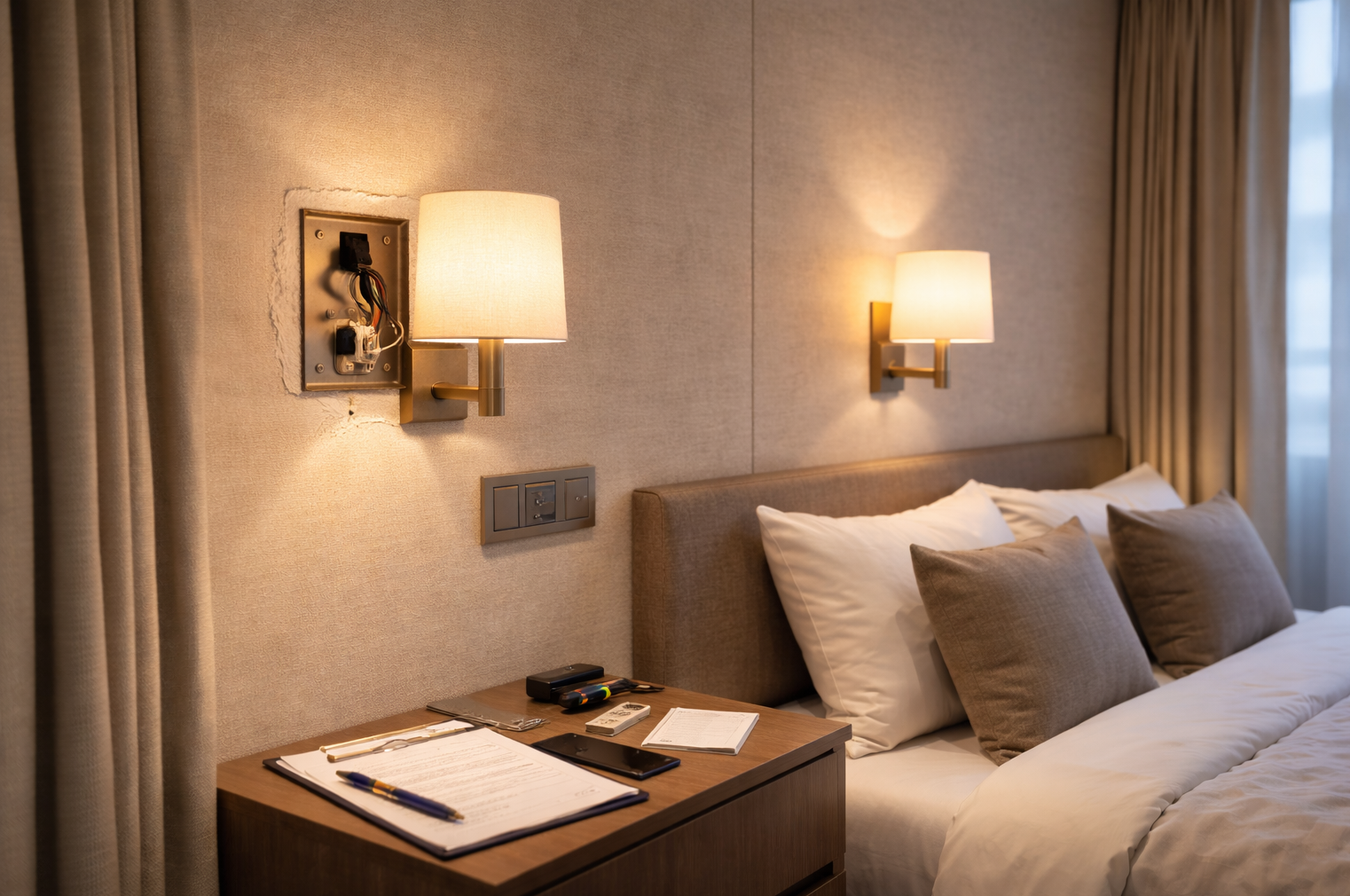 Hotel & Serviced Apartment Refresh: Check Circuits & Dimming Before Choosing Fixtures
 Why multi-stakeholder projects rush timelines but delay decisions
 Layered Lighting 101: The Fastest Upgrade That Changes a Home