
Beyond Task Lighting: Human Centric & Biophilic Design for the Premium Workplace
Beyond Task Lighting: Human Centric & Biophilic Design for the Premium Workplace
The modern premium workplace is no longer a cost center to be minimized but a strategic asset for attracting talent, fostering innovation, and enhancing well-being. Lighting has evolved from the utilitarian goal of preventing eye strain to a foundational element of human-centric design. This article explores how integrating Human Centric Lighting (HCL) and Biophilic Design principles transforms the office from a place of work into an environment that actively supports cognitive performance, emotional health, and a forward-thinking corporate culture.
1. From Illumination to Stimulation: The Science of HCL
Human Centric Lighting is the practice of using tunable LED systems to mimic the natural progression of daylight indoors. Our circadian rhythms—the 24-hour biological processes regulating sleep, hormone release, and alertness—are primarily synchronized by light. Static, cool-white office lighting can disrupt this cycle, leading to fatigue, poor sleep, and reduced concentration.
An HCL system dynamically adjusts light intensity and color temperature throughout the day:
Morning (8 AM - 12 PM): High-intensity, cool white light (~5000K) suppresses melatonin and boosts cortisol, promoting alertness and peak cognitive function for focused work.
Afternoon (12 PM - 4 PM): A gradual reduction in intensity and a shift to neutral white (~4000K) helps sustain energy and concentration without overstimulation.
Late Afternoon/Evening (4 PM+): A warm, dim light (~3000K) supports the body’s natural wind-down process, minimizing circadian disruption for those working late.
2. The Biophilic Connection: Bringing the Outside In
Biophilic design seeks to satisfy our innate human desire to connect with nature, which has been shown to reduce stress, enhance creativity, and improve well-being. Lighting is a powerful tool to achieve this connection:
Dynamic Skies: Advanced LED ceilings can simulate the subtle movement and color changes of a passing cloudscape or a slow sunrise, breaking the monotony of a static ceiling.
Dappled Light Patterns: Using filters or projected patterns to recreate the effect of sunlight filtering through leaves, adding visual complexity and calm.
Material Integration: Using light to accentuate natural materials like wood, stone, and living green walls, making them vital elements of the visual environment.
3. Zoning for Function: Light Tailored to Task
A premium office caters to diverse work modes, each requiring a distinct lighting environment:
Focus Pods & Desks: Individual control is key. Personal task lights with tunable white settings allow employees to tailor their immediate visual field. Surrounding ambient light should be calm and free of glare on screens.
Collaborative Hubs: Brighter, more uniform light supports energy and interaction. The color temperature can be slightly cooler to stimulate engagement, with accent lighting to define the zone.
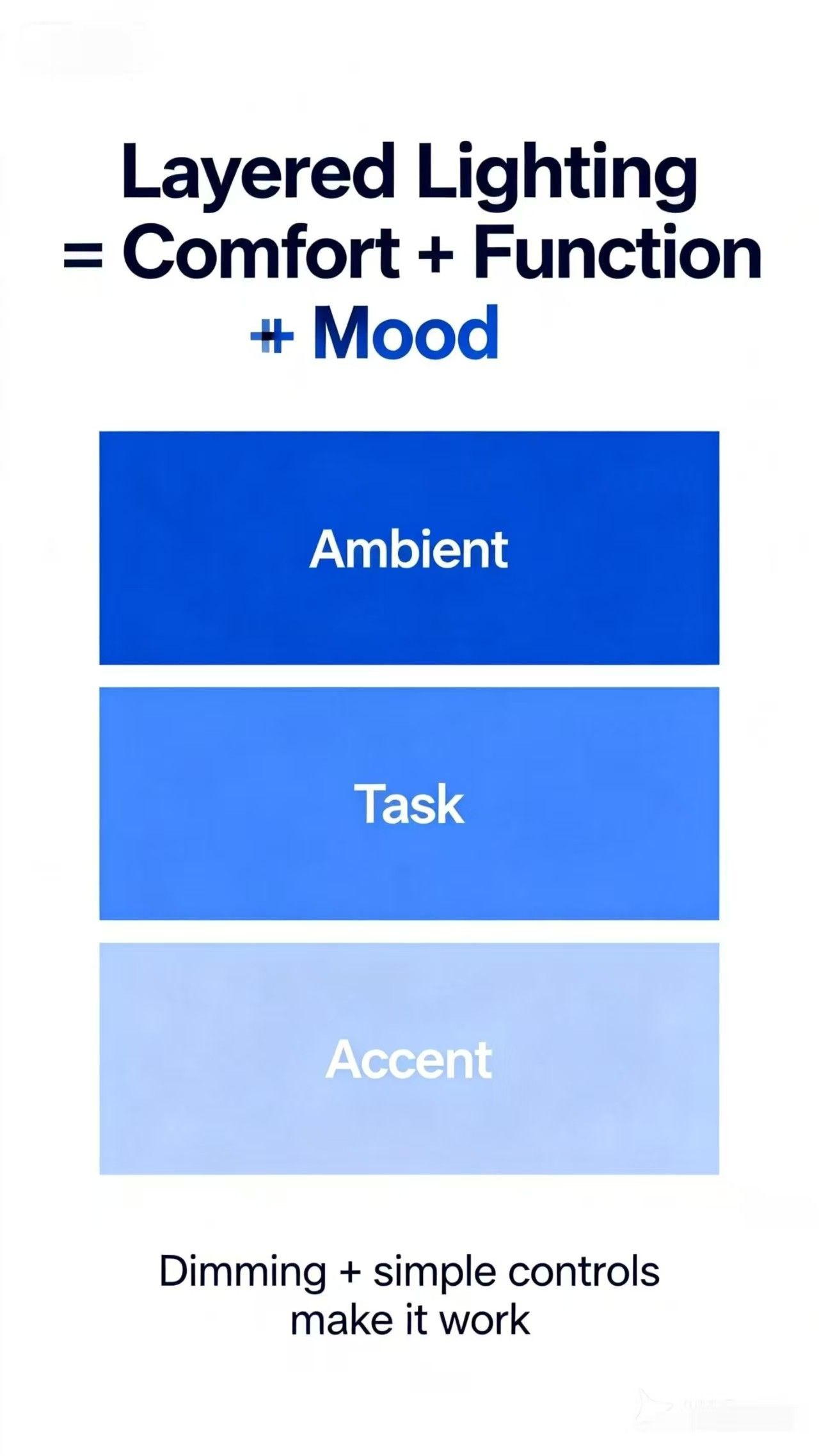
Executive & Meeting Spaces: Here, lighting combines professionalism with residential comfort. Layered schemes with decorative pendants, integrated coves, and high-quality, dimmable light on artwork create an atmosphere of refinement and strategic thinking.
Recharge & Social Areas: Warm, low-level, diffuse lighting dominates. The goal is psychological separation from the “work” zones, using soft pendants, floor lamps, and even integrated fireplace features to encourage relaxation and informal connection.
4. Integration with Architecture & Intelligence
Premium office lighting is seamlessly woven into the architecture. Indirect ambient light from coves and wall washers eliminates harsh ceiling glare, creating a soft, spacious feel. Continuous linear LED details define architectural lines and guide movement. This physical layer is governed by an intelligent network of occupancy sensors, daylight harvesting sensors, and smart controls that ensure light is delivered only where and when it is needed, optimizing both human experience and energy efficiency (often achieving 40-60% savings).
5. The ROI of Wellbeing: A Strategic Business Case
Investing in advanced workplace lighting is framed by a compelling return on investment (ROI):
Human Capital ROI: Studies link well-designed, circadian-aligned lighting to measurable gains in productivity (reduced errors, faster task completion), improved sleep quality (leading to lower absenteeism), and enhanced employee satisfaction—a key factor in talent attraction and retention.
Operational & Energy ROI: Smart sensors and high-efficiency LEDs drastically reduce electricity consumption and maintenance costs due to longer lifespans (L90 rating).
Brand & Cultural ROI: A workplace that visibly invests in employee health and cutting-edge design strengthens its brand as an innovative, caring, and desirable employer, translating into intangible but significant market value.
Conclusion: Lighting as a Pillar of Corporate Strategy
The premium workplace of the future is inherently human-centered. By moving beyond basic task lighting to embrace the biological and psychological needs of people through HCL and biophilic principles, companies make a profound statement. They recognize that their greatest asset is their people, and that the environment they provide is not just a backdrop, but an active participant in fostering well-being, driving performance, and shaping a vibrant, sustainable corporate culture.
 FM Lighting Replacements Without Guessing: Check Driver and Dimming Compatibility Before the Fixture Looks “Ready to Replace”
 Hotel & Serviced Apartment Refresh: Check Circuits & Dimming Before Choosing Fixtures
 Why multi-stakeholder projects rush timelines but delay decisions
 Layered Lighting 101: The Fastest Upgrade That Changes a Home