
A Guide to Avoiding the Pitfalls of High-End Hotel Lighting Abroad
The lighting design in high-end hotels may appear simple, but it often conceals numerous engineering pitfalls and safety hazards. Every step—from fixture selection and installation to post-installation maintenance—can suffer from technical oversights or cost-cutting measures, leading to a degraded experience and even threatening guest safety. This guide breaks down the core pitfalls to avoid across four key dimensions: design, construction, maintenance, and safety.
I. Design Phase: Beware of "Pseudo-Professional" Parameters & Functional Flaws
High-end hotel lighting often uses "low illuminance to create a sense of luxury" as a gimmick. However, an excessive pursuit of ambiance can result in functional deficiencies. The core traps lie in imbalanced parameters and unclear functional zoning:
The Conflict Between Illuminance and Color Temperature: To create a "twilight" atmosphere, some hotels lower overall room illuminance below 50 lux (falling short of the 50-80 lux standard recommended by the International Commission on Illumination). This hampers visibility for tasks like finding outlets or reading at night. The correct approach combines "ambient lighting + localized task lighting." For example, base illuminance in guest rooms should be 60-70 lux, while bedside reading lights should reach 300 lux. A zoned color temperature design is recommended, using 2700K warm light (bedroom) and 3500K cool white light (bathroom).
Misleading Color Rendering Index (CRI): Hotels may claim their fixtures have a CRI (Ra) above 90 but actually use products with Ra80. Insufficient CRI leads to noticeable color distortion for makeup application and clothing, negatively impacting the guest experience. Verify by observing if a white towel or skin tone appears unnaturally yellow or blue under the light—quality lighting should render colors close to their appearance under natural light.
Lack of Emergency Lighting: Corridors or rooms may lack low-level guidance lighting (20-30 cm off the floor), or exit signs may be insufficiently bright. A European luxury hotel once faced over €100,000 in compensation after a guest slipped and fell at night due to absent corridor emergency lighting.
II. Construction & Installation: Avoiding Technical Loopholes in "Hidden Works"
Many pitfalls during construction are hidden in "invisible" details, directly affecting lighting performance and safety:
Incorrect Fixture Placement: For example, spotlights not aimed at the bedside reading area, or wall sconces installed too low, causing glare. Correct bedside lamp height is 1.5-1.7 meters from the floor, with a beam angle controlled within 30°.
Circuit Design Defects: To cut costs, some hotels share circuits for lighting and outlets, causing lights to flicker when high-power devices (e.g., hair dryers) are used. Standard practice is to use separate circuits, with each circuit's load not exceeding 10A (approx. 2200W).
Inadequate Waterproofing: Bathroom fixtures may lack an IP65 waterproof rating, or wire connections may not be sealed with waterproof compound. A Southeast Asian resort once suffered a fire caused by water ingress short-circuiting a shower downlight, resulting in over a million USD in repair costs.
III. Maintenance & Operation: Beware of the "One-Time Investment" Mindset
Post-installation maintenance is often neglected, leading to a state of "peak performance at opening, dimming within a year":
Untimely Light Source Replacement: LED lights can experience up to 30% lumen depreciation after 2-3 years. Hotels often delay replacement to save costs, causing a gradual decline in room brightness. For instance, a Tokyo five-star hotel's room lights measured only 40% of their designed illuminance after five years, prompting guest complaints about "sleeping in a cave."
Semi-Paralyzed Smart Systems: Hotels using DALI or KNX smart systems may experience issues like lights turning off automatically or scene mode failures if firmware is not updated regularly. A European hotel chain once triggered a safety panic when corridor lights collectively failed at night due to an outdated system.
Dust Accumulation in Cleaning Blind Spots: Unclean crystal chandeliers or dusty spotlight lenses can reduce brightness by 20-30%. Correct maintenance frequency: clean guest room lighting quarterly; inspect and clean public area large fixtures monthly.
IV. Safety & Security: Recognizing the Privacy Risks of "Lighting Disguise"
Some lighting equipment might be tampered with, becoming tools for privacy invasion:
Lights Disguised as Cameras: Be wary of unusually shaped bulbs (e.g., heavier than usual, with tiny holes at the base) or suspiciously positioned spotlights (e.g., pointing directly at the bed or shower). Verification method: Turn off all lights and scan the room with a smartphone camera—the CMOS sensor may detect infrared light, showing up as a bright spot on the screen.
Emergency Lighting Failure: Emergency lights may not activate during a fire, or their backup battery may last less than 90 minutes (the international standard). Upon check-in, test the emergency light by pressing its test button and observing if it activates immediately with stable brightness.
Risk of Intense Light Stimulation: Some hotels use high-brightness LED screens or flashing lights in lobbies to create "Instagrammable" spots, which may trigger photosensitive epilepsy. Guests with a history of epilepsy should avoid prolonged stays in such areas.
Summary: The Core Principle for Avoiding Pitfalls
The essence of high-end hotel lighting is the "balance between function and atmosphere," not merely pursuing "darkness" or "dazzle." The key lies in verifying three dimensions:
Parameter Rationality: Use a mobile illuminance meter app (e.g., Lux Meter) to check if room illuminance is between 50-80 lux and if color temperature meets zoning needs.
Construction Standardization: Observe if fixtures are installed flush and wiring is concealed ("seeing the light, not the fixture" is a high-end standard).
Safety Redundancy: Check for the presence of emergency lighting, proper waterproofing, and privacy-conscious design.
Ultimately, the quality of lighting design directly reflects a hotel's professionalism. The truly high-end experience is one where you feel comfortable in the light, yet are utterly unaware of its presence.
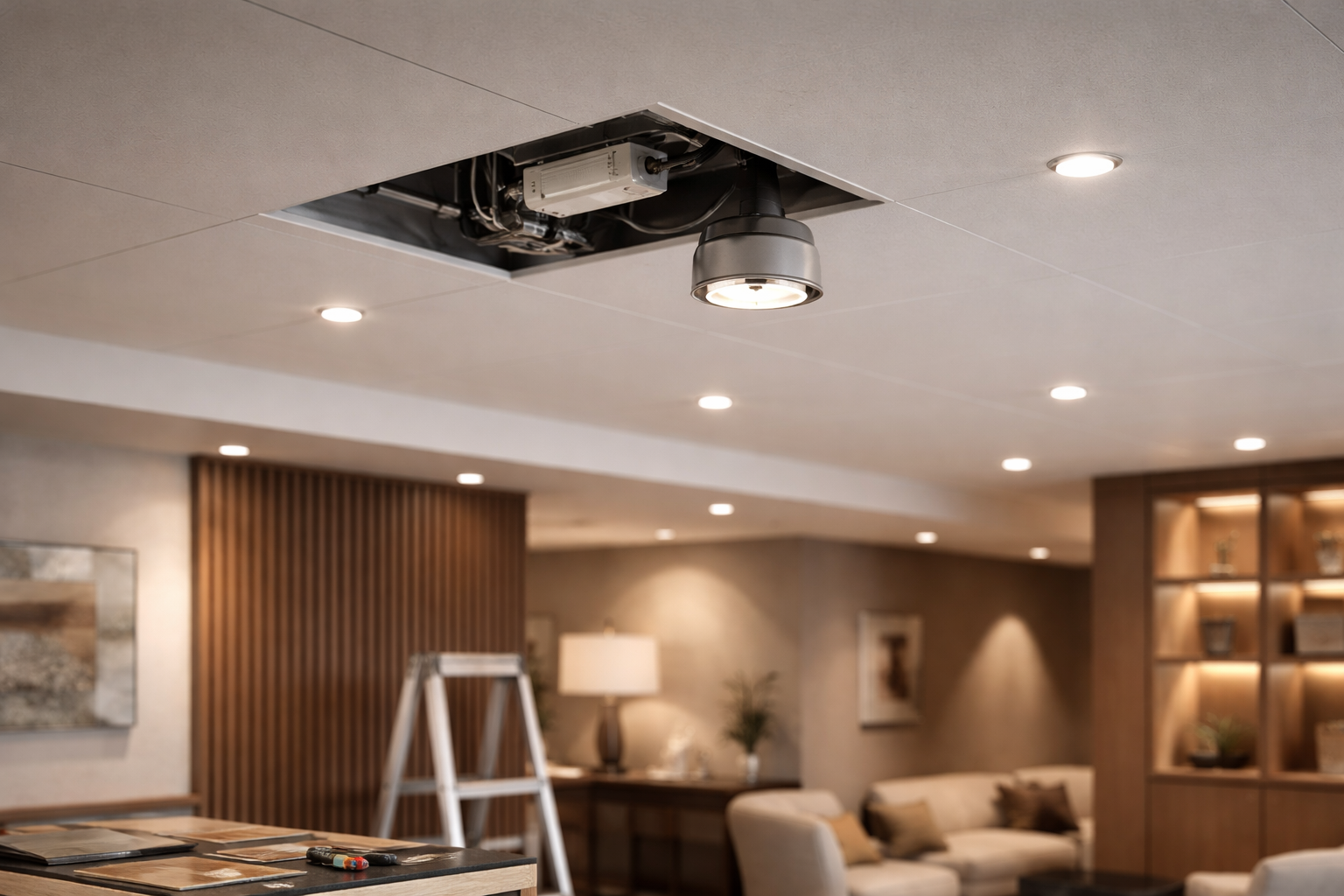 FM Lighting Replacements Without Guessing: Check Driver and Dimming Compatibility Before the Fixture Looks “Ready to Replace”
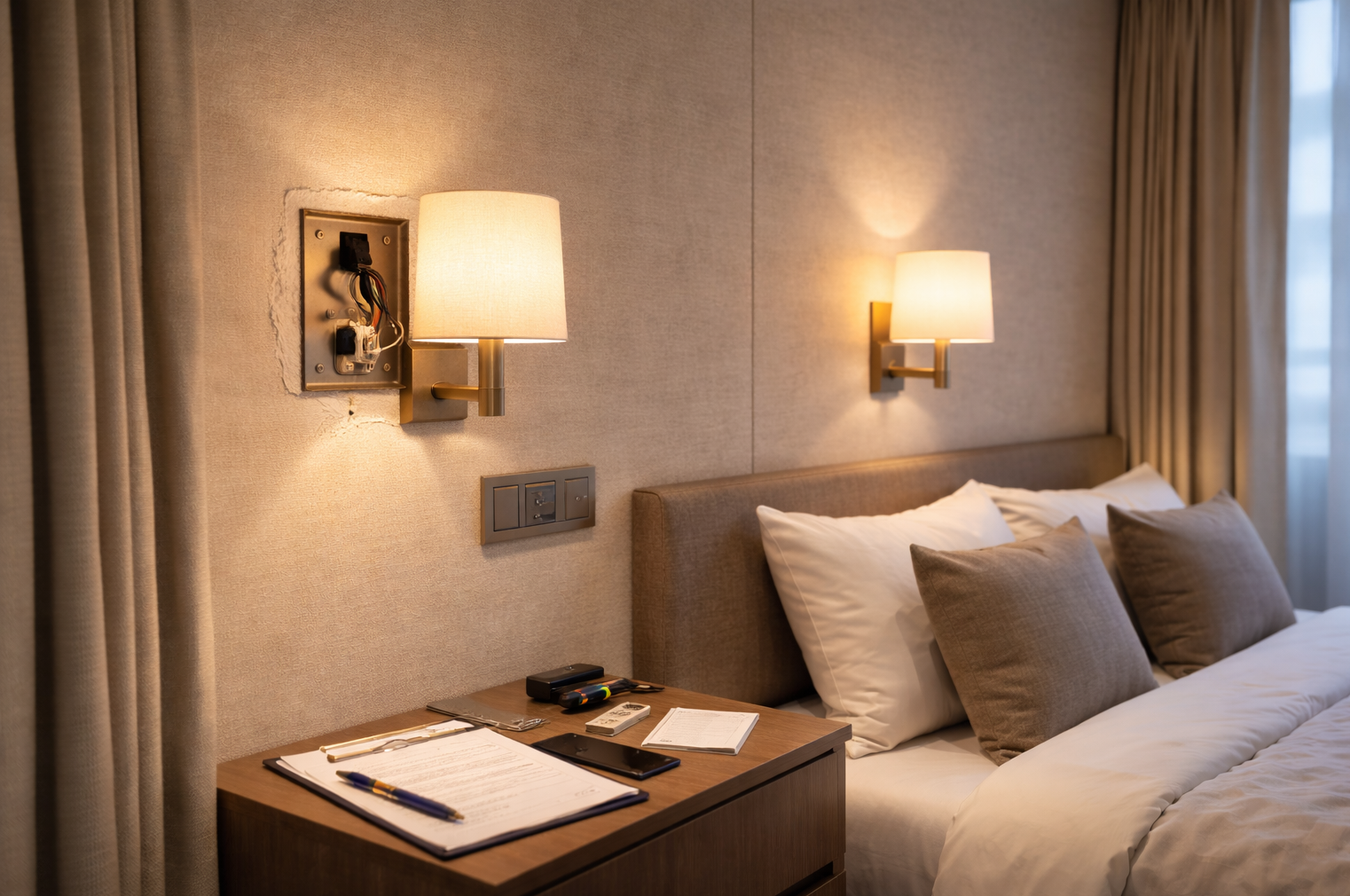 Hotel & Serviced Apartment Refresh: Check Circuits & Dimming Before Choosing Fixtures
 Why multi-stakeholder projects rush timelines but delay decisions
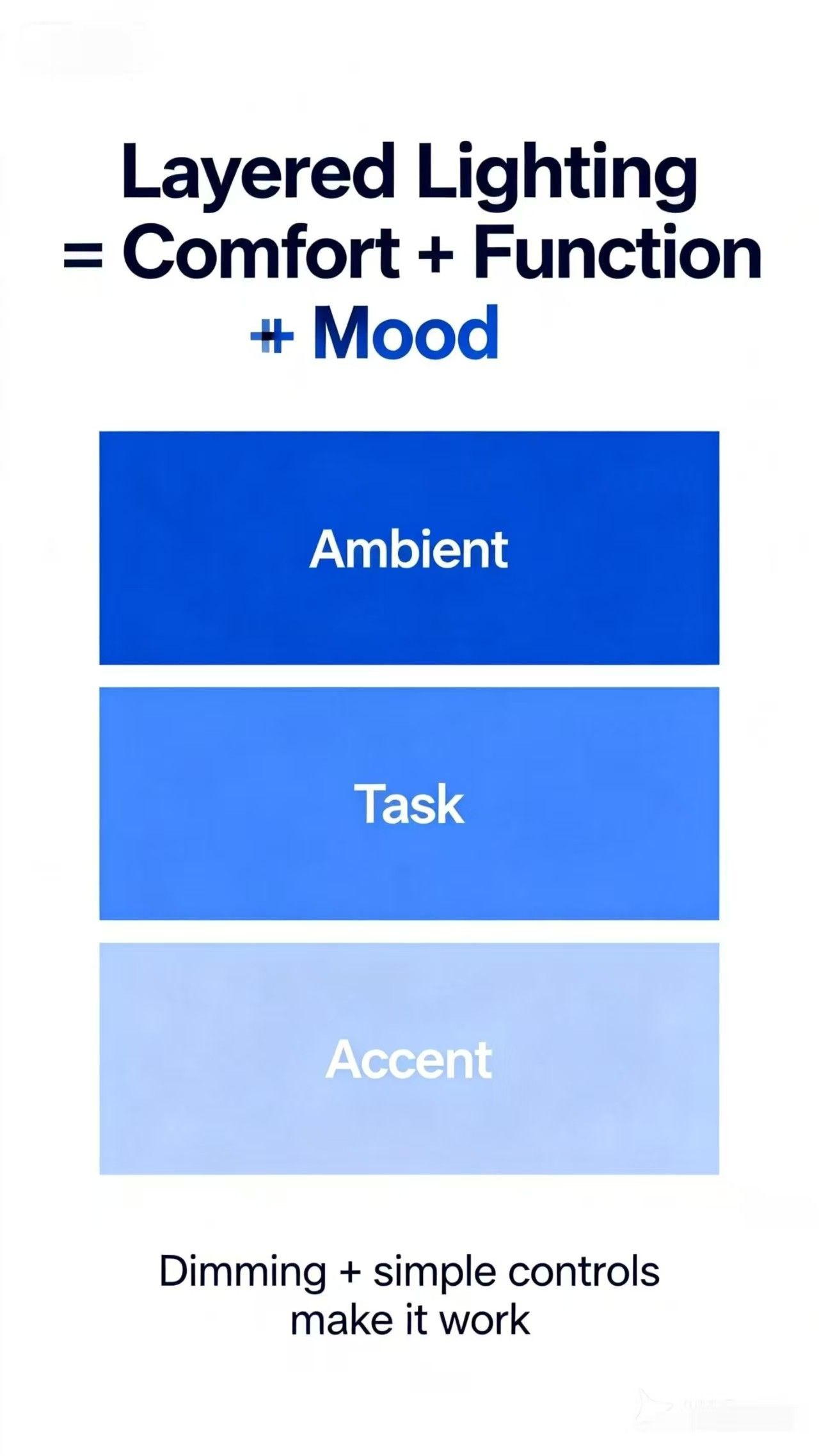 Layered Lighting 101: The Fastest Upgrade That Changes a Home