Oct 24, 2026Wholesale & Customization
Wholesale Embroidered Wall Art: Choosing Detail Within Budget
Buying embroidered wall art for resale? Compare stitched areas, ground fabric and thread finish, then define a product for wholesale orders and replenishment.
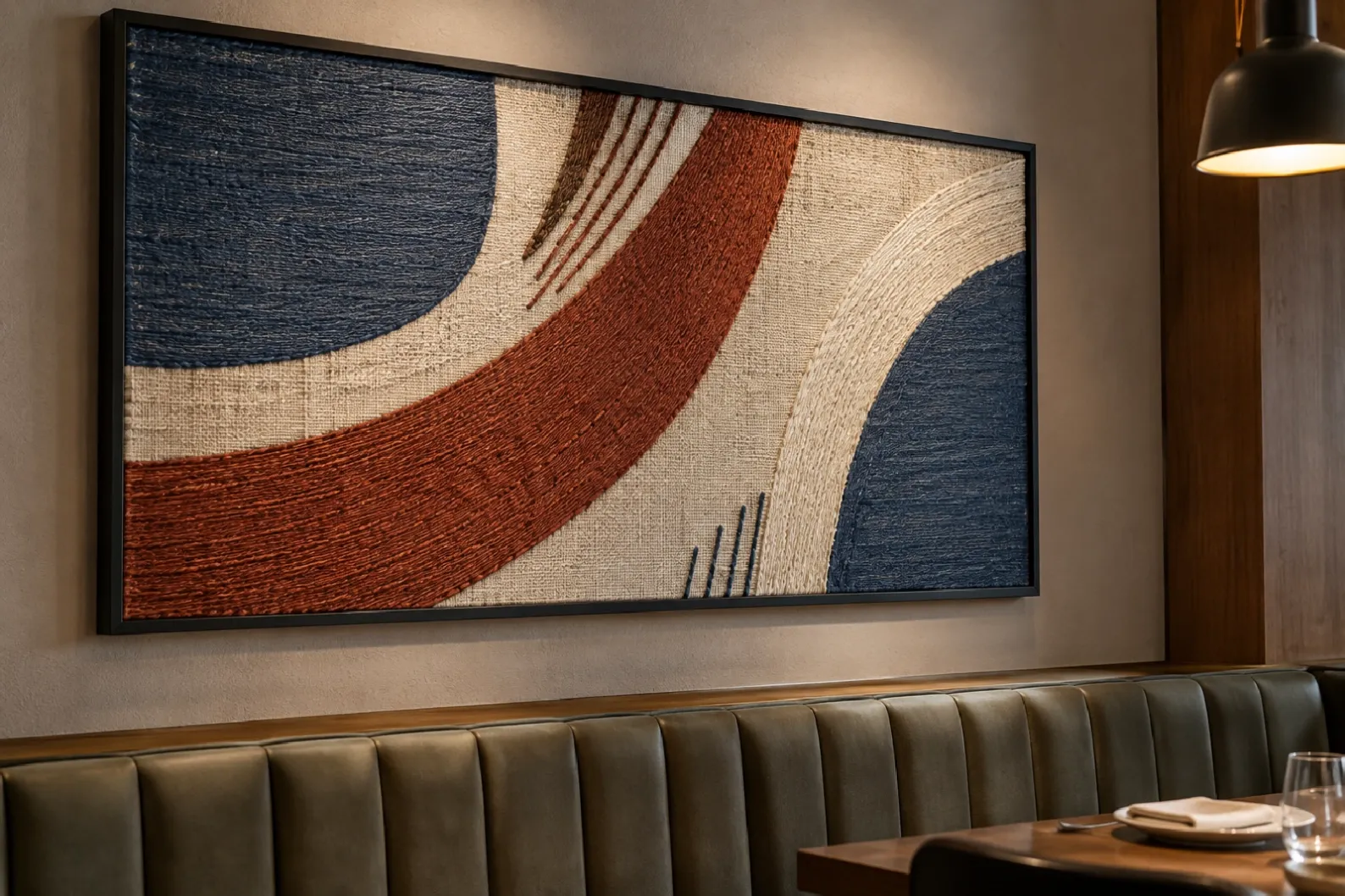
An embroidered artwork reference can leave an important purchasing detail undefined: which parts of the finished piece are actually stitched? For an importer or retail brand, that affects the product being selected, how it will be described and what needs to remain consistent when it is ordered again.
When sourcing wholesale embroidered wall art, define the embroidered features that make the reference suitable before discussing adaptations to a buying budget.
This guide is for brands, importers and distributors purchasing finished artwork for resale or ongoing hospitality supply.
Identify the Stitched Areas and the Detail Within Them
Embroidery may form the main subject, outline selected shapes or cover part of the background. Other areas may remain as exposed fabric or use another specified treatment.
The area covered and the intricacy within that area are different characteristics. A broad stitched shape can have a simple appearance, while a smaller motif can contain fine edges and colour transitions.
For example, an abstract composition may rely on embroidered bands separated by visible cloth. A figurative design may depend on fine stitched detail within its main subject. Simplifying these references would involve different product decisions.
These are illustrative purchasing examples, not documented MUENHUIDECOR customer orders.
When comparing options, establish:
- Which areas are embroidered.
- Which fine details define the motif.
- Which areas remain visible as fabric.
- Whether other areas use printing, painting or additional materials.
A marked reference can help distinguish features that must remain from secondary details that may be discussed.
The product description should also identify the actual production method where it matters to the offer. If hand embroidery is essential, state that requirement. A textured photograph does not establish hand production, and an embroidery-style print is a different product from stitched artwork.
Keep the Ground Fabric in the Comparison
Exposed fabric contributes to the finished composition.
Its colour and visible weave affect the contrast around the embroidered elements. Changing the cloth can therefore change the artwork even when the stitched pattern remains similar.
For a reference with substantial open fabric, confirm the intended ground alongside the motif. If an alternative exposes more cloth, review it as a changed composition.
The same applies when the background itself is embroidered. Removing that coverage may alter an important part of the selected product.
Where practical, assess a representative finished example and retain its agreed description. A close-up of one embroidered area cannot establish the appearance of the complete piece.
Specify Thread Appearance Without Guessing the Material
Matte, lustrous and metallic-looking thread effects create different appearances.
A similar colour name does not establish a matching finish. Describe the effect required in the reference, particularly where a highlight or restrained surface is important to the design.
Appearance also does not prove fibre content. A lustrous thread should not be described as silk without confirmation, and a metallic-looking accent does not establish a particular material.
For resale, use descriptions supported by the confirmed construction and materials.
Discuss Budget Against Fixed Product Requirements
Separate the features that must remain from those that may be reviewed.
Product feature | Requirement to clarify |
|---|---|
Main embroidered motif | Which stitched shapes and defining details must remain |
Secondary embroidery | Which smaller elements may be discussed |
Ground fabric | Whether its colour and visible texture are fixed |
Thread appearance | Any essential matte, lustrous or metallic-looking effect |
Keep the finished dimensions and framing scope clear during the comparison. Otherwise, a price difference may reflect a different complete product rather than a change in embroidery alone.
There is no fixed saving attached to removing a stitched area or simplifying a motif. Availability and price depend on the selected design, method, materials, quantity and finished specification.
If an adaptation would remove the features that made the reference suitable, ask about a different existing design within the buying range.
Define the Embroidered Product for Replenishment
For an item intended to remain in a retail range, keep the agreed stitched areas, ground fabric and thread appearance with the selected product reference.
Agree on any expected handmade differences. A missing embroidered section, a changed ground fabric or an unconfirmed material substitution should be assessed against the agreed product description.
If a later proposal changes one of those characteristics, review the change before confirming the order. The pattern name alone does not define the complete embroidered product.
This provides a basis for replenishment without promising identical individual stitches or permanent material availability. Broader assortment planning is covered in our guide to wholesale artwork collections for repeat orders.
Discuss Wholesale Embroidered Artwork With MUENHUIDECOR
MUENHUIDECOR supplies lighting, decorative artwork and selected FF&E products for wholesale and hospitality buyers worldwide. Embroidered artwork can be discussed independently for retail ranges, distribution and commercial interiors.
Available adaptations depend on the selected artwork and quantity. The examples in this guide do not mean that every design is offered in multiple embroidery treatments or price levels.
Request a Wholesale Embroidered Artwork Quote
To begin, send:
- Your selected product link or artwork reference.
- Required finished size and approximate quantity by design.
- Destination country and company name or website.
- Whether the requirement is for resale, ongoing hospitality supply or another commercial use.
Include any embroidered areas, fabric characteristics or thread effects that must remain. A target buying range is helpful where available; state whether it includes framing.
If the specification or budget is still being assessed, send the reference, sizes and quantities first. For replenishment, include the previous product reference and any requested changes. If hand embroidery is essential, state that requirement.
Send your embroidered artwork requirement to MUENHUIDECOR to discuss suitable products, available adaptations, sample arrangements and quotation scope.