Wholesale & Customization
Natural Alabaster vs Alabaster-Look Lighting for Wholesale Buyers
Natural alabaster or stone-inspired lighting? See what wholesale buyers should verify about materials, lit appearance and complete fixtures before ordering.
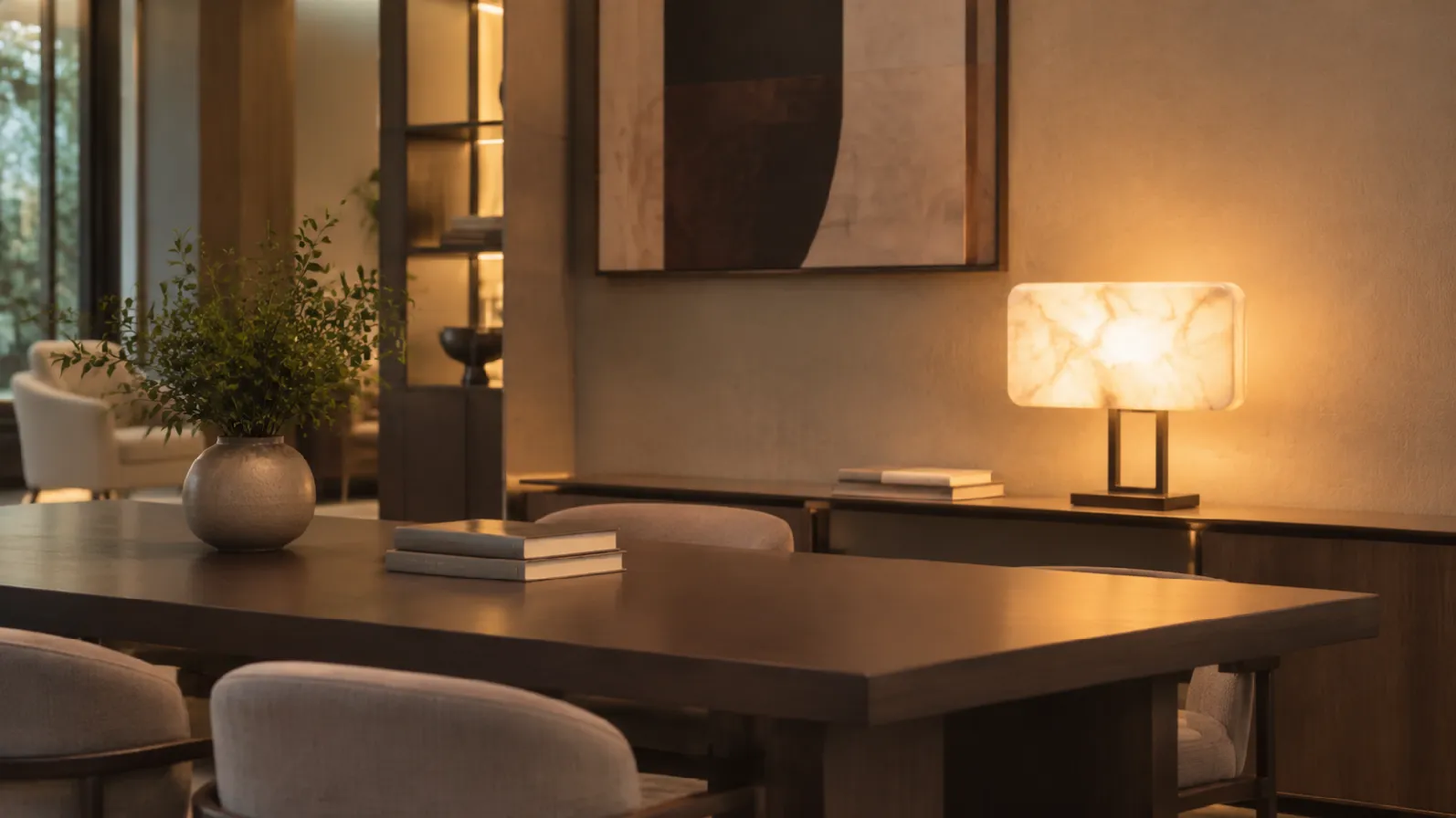
A lighting importer wants to introduce an alabaster-inspired wall light to a group of hospitality retailers. One reference specifies natural alabaster. Another shows a pale, veined finish but does not identify the material. They may appeal to similar customers, yet they cannot be described as the same product—or assumed to create the same illuminated effect.
The practical question for a distributor or retail-brand owner is not simply whether natural stone looks more prestigious. Is genuine alabaster part of the product being sold, or is the customer buying a particular visual character in a complete decorative light? A hotel operator has a related decision: how should the finished fixture look when it is off, and when it is lighting a real interior?
This article considers natural alabaster versus an alabaster-look direction for complete hospitality and wholesale lighting. It does not claim that MUENHUIDECOR currently lists a confirmed synthetic-alabaster alternative, or that a similar-looking fixture has equivalent materials, light output, price or future availability.
The Buying Decision Starts With the Claim You Make to Your Customer
For an importer, material is part of the sales description. If a product is marketed as natural alabaster lighting, the specified fixture needs a supported natural-stone material declaration. A convincing white-and-cream photograph is not sufficient evidence.
An alabaster-look brief is different. It describes an aesthetic direction, not a standardized material. Depending on the actual product, a manufactured appearance might involve glass, resin, acrylic or another construction—but none should be named as MUENHUIDECOR's available option without a specific confirmed model. A stone-finish wall light is not automatically a translucent faux-alabaster fixture.
A retailer that sells to design studios may value the naturally varied stone character as part of the range. Another buyer might prefer a defined mineral-inspired surface without promising natural stone. Both are legitimate briefs; neither should be misrepresented to trade customers.
What Buyers See With the Fixture Off—and With It On
For complete decorative lighting, two views matter. Unlit, the customer sees the diffuser's shape, tone, pattern, finish and relationship to the metal body. Illuminated, the customer sees how the actual shade or surface interacts with the specified light source and surrounding space.
Natural alabaster may show differences in tone, veining and translucency from piece to piece. Those variations can support the character of a natural-stone collection, but a catalogue photograph of one wall light should not be treated as a promise that every item will have matching veins.
For an alabaster-inspired alternative, a similar surface pattern does not establish the same transmitted glow. Some stone-look products express the effect on the outside of a surface; this is not proof that the material itself transmits light. Nor can a photograph establish brightness, glare, electrical suitability or matching across future orders.
A wholesale buyer should therefore make a decision on the actual proposed complete fixture, not a material nickname or a reference photo alone. The choice is especially relevant when a hotel or restaurant intends to install several lights within the same field of view.
Three Real Product References—and What They Do Not Prove
MUENHUIDECOR lists a Spanish alabaster wall sconce for hospitality interiors. The published specifications identify a stainless-steel structure and a Spanish alabaster natural-stone diffuser. Buyers can use this complete wall light as a starting reference for a defined quantity, finish, destination and hospitality application. The listing does not promise identical stone patterns or a verified faux-alabaster version.
A separate natural alabaster table lamp for hotel guestrooms is listed with natural alabaster stone. It may be relevant to a wholesale table-lamp range or a hospitality lounge or guestroom setting. It is a different finished product from a wall-mounted sconce; the parts and use cases should not be treated as interchangeable.
The website also lists a stone-finish decorative wall light. Its material field states metal plus stone finish / stone-look surface. That supports an enquiry about a stone-inspired complete wall fixture, not a claim that it uses resin, acrylic, synthetic alabaster or a diffuser identical to the natural-stone product.
These distinctions matter when a business is buying for resale. The catalogue description must stay accurate for the precise model and version offered to its customers.
A Short Comparison for Commercial Buyers
Buying priority | Specified natural-alabaster fixture | Alabaster-look or stone-inspired brief |
|---|---|---|
Customer-facing material claim | Identify the natural-stone component in the selected fixture | Identify the actual material of a confirmed model; do not label an unknown finish as natural stone |
Unlit appearance | Expect stone character and possible natural variation | Evaluate the actual surface, silhouette and stated composition |
Illuminated appearance | Review the specified diffuser and complete lighting configuration | Confirm whether the proposed surface is translucent and what the complete light actually produces |
Multiple fixtures in one space | Decide whether visible variation suits the interior | Do not assume a more consistent result without product evidence |
First wholesale enquiry | Name the complete product, quantity and destination | Name an available product or a defined brief, subject to feasibility review |
Neither column proves that one direction is always cheaper, more durable, lighter, easier to clean or easier to reorder. Those conclusions require evidence for the actual product and order conditions.
A Wholesale Range and a Hotel Installation Need Different Answers
Consider two illustrative situations—not claims about completed MUENHUIDECOR customer orders.
A distributor introducing a lighting range. Its trade accounts may want a natural-stone wall fixture with a recognizable material story. The purchasing conversation should begin with the listed model, intended resale market, first quantity by version and whether a later collection order is possible. A future order remains subject to actual availability and agreed specifications; it is not guaranteed by the first purchase.
A hospitality buyer specifying a shared lounge. Its concern may be how the selected wall or table light reads alongside other fixtures when the space is used by guests. Natural variation could be welcome, or an agreed visual direction could be more important. The appropriate product still depends on the complete fixture and requirements of that location—not on whether an image resembles alabaster.
If the customer is asking how to establish a general wholesale or customization programme, MUENHUIDECOR's separate custom and semi-custom supply guide covers that broader question. This article addresses which lighting material identity and lit appearance the buyer is prepared to offer.
When a Similar-Looking Option Is the Wrong Commercial Product
An alternative is not a substitute simply because both lights appear creamy-white in product images. If the buyer's catalogue promises a specified natural stone, a stone-look surface cannot be presented as the same material. If the brief requires a particular lit effect, a product without confirmed light-transmitting characteristics cannot be treated as equivalent.
The final luminaire also has its own mounting, electrical configuration, care requirements and destination-market considerations. These must be checked for the proposed fixture. The article cannot establish compliance, product safety, light performance or material composition by visual comparison.
The commercially sensible outcome may be to keep a specified natural-alabaster model, choose a different already-listed complete light, or submit a narrowly defined review request. It is not necessary to disclose reverse-engineering, material recipes or unsupported savings estimates to make that choice.
Discuss a Defined Alabaster Lighting Wholesale Requirement
MUENHUIDECOR supplies decorative and selected architectural lighting for international wholesalers, importers, interior brands and hospitality buyers. Begin with a named lighting product, such as the Spanish alabaster wall sconce, instead of requesting an unspecified cheaper copy.
Please include your company or brand, a complete-fixture link or drawing, whether natural alabaster is mandatory or a stone-inspired look may be considered, your most important lit and unlit appearance requirement, the first expected quantity per model, destination country, and resale channel or hospitality location. For buyers serving several accounts, indicate whether the enquiry is a new collection introduction or part of ongoing wholesale purchasing, along with a realistic buying stage.
Feasible variations, samples, electrical documentation, minimum quantities, protective packaging, price, lead time and any later replenishment require product-specific confirmation. They should not be assumed from a published photograph or an initial enquiry.
Send MUENHUIDECOR a product-specific wholesale lighting enquiry with your reference, market and intended quantity.