Oct 9, 2026Wholesale & Customization
Why Retail Artwork Assortments Fail And How Buyers Create Better Product Balance
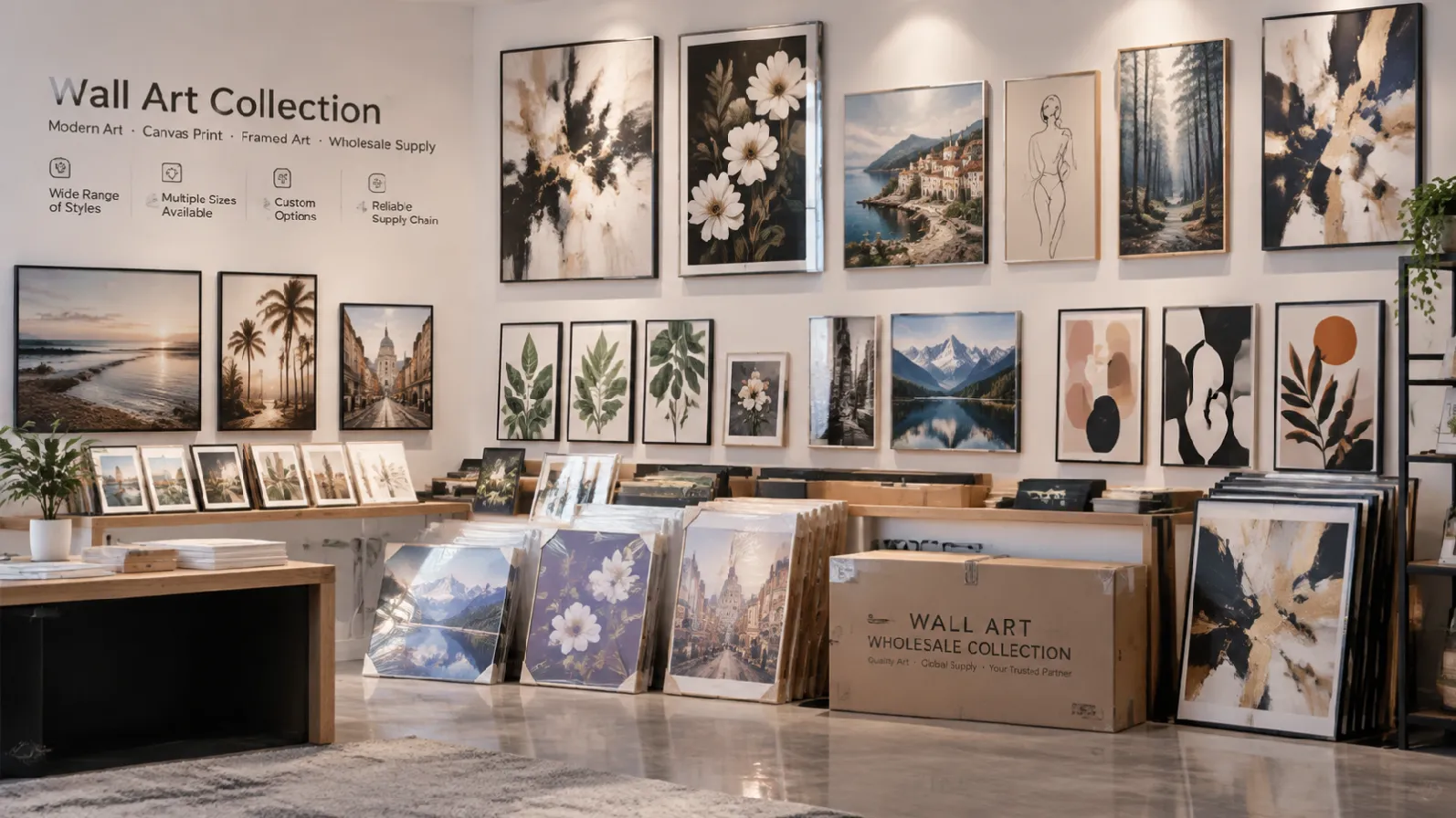
Retail artwork assortments can fail when products look similar or lack clear purpose. Learn how buyers create balanced artwork selections for retail and commercial applications.

For retail brands, artwork selection is not only about finding attractive designs.
The bigger challenge is creating an assortment that customers can understand and purchase.
Many buyers experience the same situation:
Individual artwork pieces look appealing, but the complete assortment does not create strong product differentiation.
Some products feel too similar.
Others do not fit the overall brand direction.
A successful artwork assortment requires balance between consistency and variety.
The goal is not adding more SKUs.
The goal is creating a product selection where each item has a clear commercial purpose.
Why Attractive Artwork Does Not Always Create A Strong Retail Assortment
A product can look impressive individually but still create challenges when placed together with other products.
Common problems include:
- too many similar visual styles;
- unclear differences between products;
- weak showroom presentation;
- difficulty helping customers choose.
For retail buyers, product quantity does not automatically create more sales opportunities.
The assortment needs structure.
The Importance Of Product Balance In Artwork Buying
A balanced artwork assortment usually considers several factors:
Visual Relationship
Products should feel connected without becoming identical.
Product Difference
Each artwork should offer a clear reason for customers to consider it.
Application Flexibility
Different products may serve different spaces, customer preferences or display purposes.
Collection Updates
Retailers may need new products for seasonal refreshes or future assortment changes.
Avoiding The Problem Of Similar Artwork SKUs
When many products have the same:
- composition style;
- color direction;
- visual impact;
- size format;
customers may find it difficult to understand the difference.
For buyers, every SKU should answer one question:
Why should this product exist?
A stronger assortment may include:
- statement pieces;
- supporting artwork;
- different formats;
- different visual focuses.
How Commercial Buyers Evaluate Artwork Categories
Before expanding an artwork category, buyers usually consider:
Target Customer
Artwork should match the expectations of the final market.
A boutique lifestyle retailer, hospitality concept store and interior brand may require different approaches.
Application
Artwork requirements may differ between:
- retail displays;
- hospitality interiors;
- commercial spaces;
- interior design projects.
Quantity And Collection Direction
Buyers should understand whether they need:
- a small wholesale test;
- seasonal product updates;
- ongoing assortment development.
Information To Prepare Before Discussing Artwork Supply
Before contacting a supplier, buyers can prepare:
- artwork references;
- preferred sizes;
- expected quantity;
- application;
- destination market;
- preferred style direction.
This allows suppliers to better understand the commercial requirement.
Artwork Can Become A Starting Point For Wider Interior Categories
Many businesses begin cooperation with one product category.
Artwork can later expand into:
- decorative objects;
- candle holders;
- trays;
- selected lighting products.
This allows brands to develop broader interior collections based on market demand.
Building Artwork Assortments With Long-Term Value
Successful artwork programs are not created by selecting the largest number of products.
They are created by selecting products with clear roles.
For retailers, interior brands and hospitality buyers, strong artwork assortments require:
- product balance;
- visual consistency;
- meaningful differences;
- future expansion opportunities.
MUENHUIDECOR supports global wholesale buyers, interior brands and commercial projects with artwork, decorative products and selected FF&E solutions.
If you are developing an artwork assortment, share your artwork references, preferred size, quantity, application and destination market for a sourcing discussion.
Developing an artwork assortment for your business?
Please provide:
- artwork references
- preferred size
- quantity requirement
- application
- destination market
MUENHUIDECOR can review your requirement for wholesale artwork and custom solutions.